

Table of Contents
- What Heat Treatment Means for Gemstones
- Why Gemstones Are Heat Treated and How Heat Changes Color and Clarity
- How to Tell If a Gemstone Is Heat-Treated Without Professional Equipment
- Heat-Treated Sapphire Before and After: What Changes Inside the Stone
- Gemstone Treatment Codes and What Lab Reports Tell You
- Are Heated Gemstones Less Valuable?
- Your Next Step: Asking the Right Questions Before You Buy
- Frequently Asked Questions
How to Tell If a Gemstone Is Heat Treated: A Practical Guide
Last Updated: November 7, 2026
What Heat Treatment Means for Gemstones
Heat treatment is one of the oldest and most common ways to change a gemstone. Sellers heat a stone to improve its color or clarity, often making a pale or cloudy piece look more vivid. Many shoppers want to understand what they are buying before they take a gemstone home.
Heat treatment is a process where a stone is exposed to controlled high temperatures, sometimes for hours, to alter its appearance. The change can be temporary or permanent, depending on the stone and how it was heated. This is why a clear answer about treatment matters.
Treatment is not automatically a problem. Many buyers are happy with a heated stone. The real issue is disclosure. A stone should be described honestly, so you know what you are paying for.
Why Gemstones Are Heat Treated and How Heat Changes Color and Clarity
Sellers usually heat gemstones for two reasons: to improve color and to improve clarity. Heat can make a stone look bluer, deeper or more even in color. It can also soften or dissolve some internal features that make a stone look cloudy.
Ruby and sapphire are the stones most often heat treated. A stone with a greenish tint may look bluer after heating, which many buyers find more attractive. Heat can also reduce the look of fine silk, the tiny needle-like inclusions inside a stone.
Heating does not always create a lasting change. Some treatments hold up well, while others can be affected by later exposure to heat. Ask the seller how the stone was treated and whether the result is permanent.
- Color: Heat can deepen or shift a stone's color.
- Clarity: Heat can make inclusions less visible.
How to Tell If a Gemstone Is Heat-Treated Without Professional Equipment
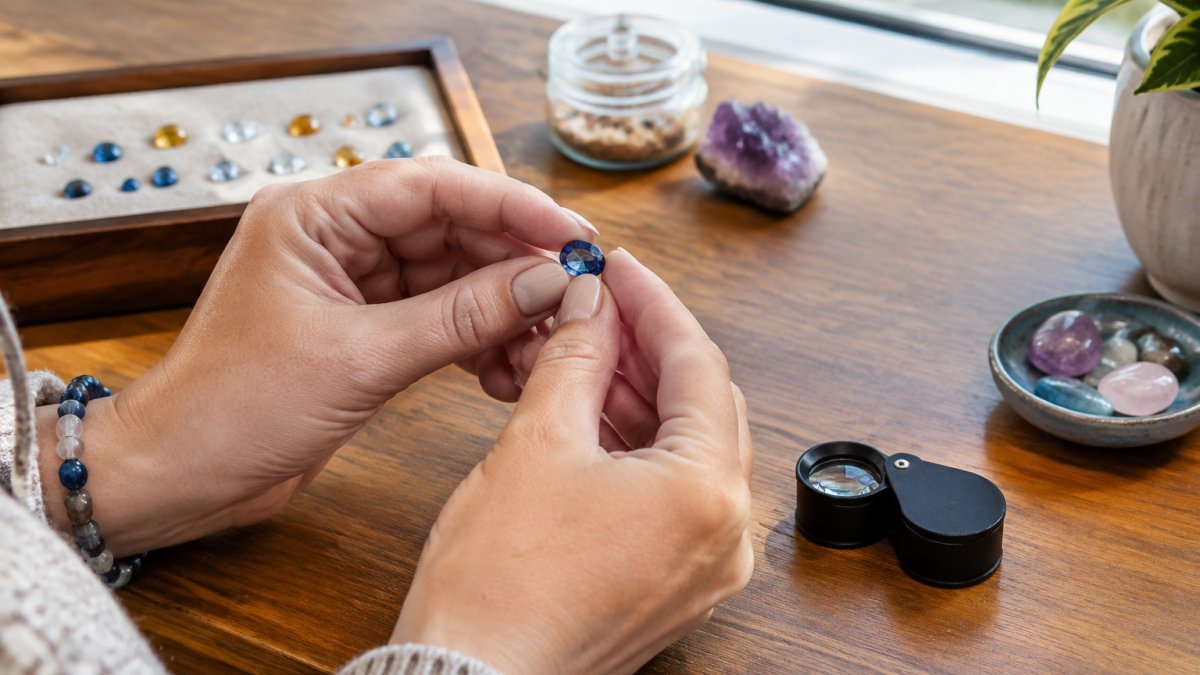
You can learn a lot with simple tools and careful looking. A 10x jeweler's loupe and good daylight are enough for a first check. Keep in mind that these steps can suggest treatment, but they cannot prove it. The most useful approach is to inspect the stone in a consistent order, note what you see, and treat every observation as a clue rather than a conclusion.
A Step-by-Step Inspection Workflow
Start with clean hands and a clean stone. Work over a soft surface so you do not drop it. Use a loupe with a built-in light if you have one, and keep a small notepad or your phone handy to record what you see.
- Examine the surface first. Look for scratches, pits, or small chips that might have come from heating. Some heated stones develop fine surface-reaching fractures or a slightly frosted look near the girdle.
- Check color distribution. Turn the stone slowly under daylight. Note whether the color is even or banded. Strong, straight color zoning can be a clue, but it also occurs in untreated stones.
- Look inside for silk. Fine, needle-like rutile silk is common in ruby and sapphire. In a heated stone, silk may appear broken, fuzzy, or partly dissolved rather than sharp and continuous.
- Inspect crystal inclusions. Some mineral crystals inside a stone become rounded or cloudy after heating. Sharp, well-formed crystals are more typical of an unheated stone.
- Look for fracture healing. Tiny cracks that appear partially healed or filled with a glassy material can suggest heat treatment, especially in ruby.
- Compare with a known stone. If the seller has an untreated example of the same species, place them side by side under the same light. Differences in silk sharpness and color evenness become easier to see.
Species-Specific Clues
Heat effects are not the same across all gemstones. A clue that matters for ruby may mean nothing for spinel.
- Ruby: Look for broken silk, rounded crystal inclusions, and partially healed fractures. Heat treatment is extremely common in ruby, so a clean, bright stone with no visible silk is worth asking about.
- Sapphire: Silk that looks dissolved or absent can be a clue, especially in blue sapphire. Some heated sapphires show a slight change in color zoning near the surface.
- Spinel: Heat treatment is less common and often leaves fewer visible signs. A lab report is usually the only reliable way to know.
- Other stones: Amethyst, citrine, and some tourmalines are routinely heated, but visible evidence is often minimal. For these, disclosure from the seller matters more than visual inspection.
Clues Versus Proof: What a Visual Check Can and Cannot Confirm
A visual check gives you clues. It does not give you proof. Many untreated stones look similar to heated ones, and some treated stones show few visible signs at all.
Here is the difference:
- Clues: Features that make treatment possible, such as altered silk, rounded crystals, or unusual color zoning.
- Proof: A written lab report from a recognized gemological laboratory that identifies the treatment.
Watch out: treating a single clue as a diagnosis is the most common mistake buyers make. A stone with broken silk may still be unheated, and a heated stone may show no obvious signs under a loupe.
If the price is high or the seller makes a strong claim, ask for a lab report. Lab testing is the only reliable way to be sure about treatment. For everyday purchases, use your visual check to decide whether a report is worth requesting.
Heat-Treated Sapphire Before and After: What Changes Inside the Stone
Sapphire is a good example of how heat changes a stone from the inside. Many sapphires contain tiny rutile silk. Heat can dissolve or change this silk, which often leads to a cleaner, more transparent look.
A typical sapphire may start out pale, cloudy or greenish. After heating, it may look bluer and more evenly colored. The stone itself has not become a different material, but its internal features have changed.
Before you buy, ask the seller whether the sapphire is heated and whether that heating is permanent. A clear answer helps you compare prices fairly.
Gemstone Treatment Codes and What Lab Reports Tell You
Lab reports often use short treatment codes and notes. These codes tell you what the laboratory found. A report may say a stone was heated, or it may list no treatment at all. Understanding what the laboratory actually examined helps you read the report with realistic expectations.
What a Gemological Laboratory Can Examine
A recognized gemological laboratory uses specialized equipment that goes far beyond a loupe. Depending on the stone and the laboratory, examiners may use:
- Microscopy: High-magnification inspection of inclusions, fractures, and internal features.
- Spectroscopy: Instruments that measure how the stone absorbs or emits light, which can reveal treatment-related changes.
- Fluorescence imaging: Some treatments leave fluorescence patterns that are visible under specific light sources.
- Immersion: Placing the stone in a liquid with a similar refractive index to see internal features more clearly.
These methods allow a laboratory to detect many treatments, but no laboratory can see everything. A report states what was observed and what conclusion the evidence supports. Our certified loose gemstones buyer's guide explains what a certification document confirms and what it does not.
Reading Treatment Wording
Treatment wording on a report is often more nuanced than a simple yes or no. Common patterns include:
- "No evidence of heat treatment", The laboratory found no signs of heating. This is not the same as a guarantee that the stone was never heated.
- "Evidence of heat treatment", The laboratory observed features consistent with heating.
- "Heat treatment not detected", Similar to no evidence, but wording varies by laboratory.
- "Indications of heat treatment", The laboratory saw clues but may not be able to state the treatment with full certainty.
Watch out: a report that says no heat treatment was detected does not mean the stone is untreated in every sense. It means the laboratory did not find evidence of heat treatment at the time of examination.
What a Report Can and Cannot Conclude
A report can identify the stone, describe visible features, and state whether the laboratory found evidence of treatment. It cannot always determine the origin of the stone, the exact temperature used, or whether a treatment is permanent. Some treatments, such as diffusion or filling, may require different tests than heat treatment alone.
When you read a report, look for these details:
- The name of the laboratory that issued it
- The stone type and identification
- Any treatment noted, including heat
- The date of the report
A report is most useful when it comes from a recognized gemological laboratory. If you are unsure how to read one, ask the seller to explain it in plain language. A trustworthy seller will walk you through the wording without pressure.
Are Heated Gemstones Less Valuable?
Heated gemstones are often priced lower than unheated stones of the same type and quality. That is because unheated stones are rarer. The difference in price reflects how much the buyer is paying for natural color and clarity.
Heated stones still have real value. Many people love their color and find them a good fit for everyday jewelry or collections. The key is knowing what you are buying and paying a price that matches it.
Pricing depends on the stone, its size, its quality and the treatment. For current prices or a quote on a particular piece, check with For Heaven's Sake directly.
Your Next Step: Asking the Right Questions Before You Buy
Before you buy any gemstone, ask the seller a few direct questions:
- Has this stone been heat treated, and is the result permanent?
- Can you provide a lab report from a recognized laboratory?
- What other treatments, if any, were used?
- Can I see the stone under magnification?
A trustworthy seller will answer these questions clearly. If the answers are vague, take that as a reason to slow down. If you prefer to shop in person, this Denver buyer's guide to trustworthy gemstone jewelry stores explains what to look for. Our guide to common mistakes when buying gemstones online covers undisclosed treatments and other pitfalls to avoid. For a deeper checklist, see how to ask a gemstone seller the right questions.
Looking for a helpful shop to talk through your options? Visit For Heaven's Sake to browse our crystals and gemstones, and ask our team how to tell if a gemstone is heat treated before you decide. You can also read our where to buy authentic gemstones guide before you visit.
Frequently Asked Questions
How to tell if a gemstone has been heat-treated?
Start with a careful visual check. Look for internal features such as silk inclusions, and note whether color looks evenly distributed or zoned. Under magnification, certain inclusion patterns can suggest heating, but these are clues rather than proof. A visual check cannot reliably confirm treatment on its own, so if the stone's value depends on the answer, ask for a report from a gemological laboratory that examines the stone with specialized instruments.
Are heat-treated gems less valuable?
Heat treatment is common in the trade. The size of any difference in price depends on the species, the quality, and the treatment itself. Pricing varies widely, so compare quotes from sellers and check the treatment disclosure on the paperwork before deciding. Ask the seller directly whether the stone is treated and whether a report is available.
Can a jeweler tell if a gemstone is real and whether it has been treated?
A jeweler can often identify whether a stone is a natural gemstone, synthetic, or simulant with standard tools. Confirming heat treatment is more demanding. Many treatments are difficult to detect without advanced equipment, so a jeweler may give an opinion based on visual clues but may recommend a gemological report for certainty. Ask whether the jeweler can refer you to a laboratory and what the report will cover.
Should gemstone heat treatment be disclosed when buying?
Yes. Reputable sellers disclose known treatments in writing, usually on the invoice or a laboratory report. Ask for that disclosure before purchase, and keep the documentation with the stone. If a seller is unwilling to state the treatment status, treat that as a reason to look elsewhere.
