

Table of Contents
- Why Authenticity Matters When Buying Gemstone Jewelry
- How to Identify Real Gemstones: A Practical Checklist
- What to Look For in an Authentic Gemstone Jewelry Store in Denver
- Popular Gemstone Jewelry Categories and What They Cost
- Gemstone Care and Maintenance Tips for Long-Lasting Jewelry
- Ethically Sourced and Sustainable Jewelry: What to Ask
- Frequently Asked Questions
Last Updated: September 17, 2026
Why Authenticity Matters When Buying Gemstone Jewelry
Everything looks real under warm display lighting. An authentic gemstone jewelry store earns your trust by showing you what a stone actually is, not by dressing it up.
How to Identify Real Gemstones: A Practical Checklist
How to identify real gemstones comes down to two things: paperwork and observation. Ask for the documentation first, then use your eyes and a loupe to confirm the stone matches it. No single at-home test proves authenticity.
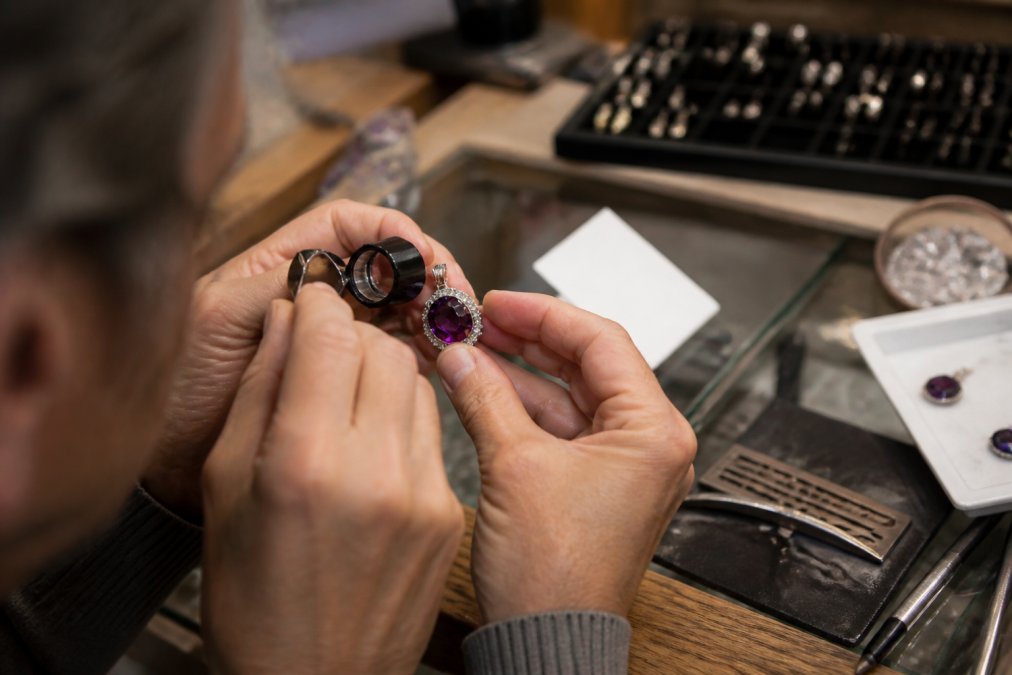
Reading Certification and Paperwork
A GIA certified report is the strongest single piece of evidence you can hold. The Gemological Institute of America is an independent lab, and its reports describe a stone's identity, measurements, and treatments.
- Stone identity. The report should name the species, not a trade nickname. "Blue apatite" is specific. "Blue stone" is not.
- Treatment disclosure. Heating is common and often permanent. Dyeing, fracture filling, and surface coatings are not, and they change how you care for the piece.
- Natural versus synthetic. Lab-grown material is real material, but it should be labeled as such. Undisclosed synthetic is the actual problem.
- Carat weight and measurements. These should match the stone in front of you.
Physical Tests You Can Do in the Store
Visual checks won't certify a stone, but they catch obvious mismatches.
- Look for internal character. Natural stones usually carry inclusions. A perfectly clean, flawless stone at a low price deserves a question.
- Check color consistency. Natural color often shifts slightly across a stone. Uniform, flat color can signal glass or dye.
- Feel the weight. Many imitations feel lighter than the natural stone they copy. A weak signal on its own, never a verdict.
- Ask to see it under different light. Daylight and incandescent light reveal different things. A shop that welcomes this trusts its inventory.
What to Look For in an Authentic Gemstone Jewelry Store in Denver
A trustworthy shop does four things consistently: it names its stones accurately, discloses treatments, welcomes questions, and stands behind what it sells. Those behaviors matter more than any brand name.
The Twenty-Minute Store Evaluation
Walk in with a specific stone in mind, even if you have no intention of buying it that day. The point is to test how the shop handles a real question.
- Ask for the species name first. Not the trade name. "Blue lace agate," "charoite," "moldavite." A shop that leads with the species knows its inventory.
- Ask about treatment, unprompted. Heating, dyeing, fracture filling, and coatings change both value and care. A confident answer sounds like "this one is heated." A vague answer sounds like "it's all natural."
- Ask to see the piece under two light sources. Daylight and incandescent light reveal different things about color and clarity.
- Ask what happens if the stone is not what it was sold as. The answer tells you whether the shop stands behind its descriptions in writing.
- Ask how to care for that specific stone. If the answer is the same generic script for every stone, the staff may not be tracking treatments.
Signals That Separate a Real Gemstone Store From a Gift Shop
- Written disclosure on the receipt. Verbal assurances disappear. Paperwork does not.
- Staff who can tell you where a stone came from. Not a country on a label, but a real answer about sourcing and, when relevant, the cutter or supplier.
- Consistent answers across visits. If the story changes between trips, the inventory probably is not well tracked.
- A repair and maintenance path. A shop that can care for a piece long-term has a stake in it being genuine.
- A willingness to hand you a loupe. Reluctance to let you examine a piece closely is a red flag.
- A clear distinction between natural, lab-grown, and imitation. A shop that blurs these categories is being strategic, not careless.
Why Independent Shops Often Outperform Chains on This
Chain jewelers operate on volume and standardized scripts. Independent shops live or die on repeat customers and word of mouth, so the person answering your question about a stone is often the person who chose it, a structural advantage for buyers who care about accuracy.
A Note on Certification Claims
Not every stone carries an individual lab report, and that is normal, smaller, more affordable pieces often come with a shop's own written disclosure instead. What matters is that the shop puts the stone's identity in writing and tells you when a stone does carry an independent report. If a shop claims every stone is certified, ask to see the paperwork.
Popular Gemstone Jewelry Categories and What They Cost
Different categories carry very different price points, and understanding the spread helps you set a realistic budget. The gap most buyers run into is not knowing why two similar-looking pendants can sit hundreds of dollars apart. The answer is almost always one of four things: species, treatment, cut and setting, and scarcity.
What Actually Drives the Price of a Gemstone Piece
- Species and scarcity. Moldavite is a natural glass formed by a meteorite impact and found in a limited region, which is why it commands higher prices than common quartz. Charoite comes from a single known source area, limiting supply. Garnet is widely available, keeping entry prices lower.
- Treatment. Untreated natural material is generally more valuable than treated material of the same species. Heating is common and often permanent. Dyeing, fracture filling, and coatings are not, and they change how you care for the piece.
- Cut and setting. A hand-finished cabochon or a basket setting takes more labor than a simple bezel. Labor is a real part of the price, not a markup.
- Size and clarity. Larger stones with fewer visible inclusions cost more within the same species.
How to Read a Price Range by Category
Below is a comparison of pendant and earring styles currently in our collection, with the actual prices so you can see how the range breaks down.
| Category | Example Piece | Stone Type | Price |
|---|---|---|---|
| Everyday pendant | Blue Lace Agate Point Pendant | Blue lace agate | $28.00 |
| Everyday pendant | Carnelian Point Pendant | Carnelian | $21.00 |
| Symbolic pendant | Chakra Gemstone Pendant | Mixed chakra stones | $39.95 |
| Symbolic pendant | Angel Wing Pendant | Natural mixed gemstones | $39.95 |
| Collector pendant | Garnet Cabochon Pendant | Czech garnet | $95.00 |
| Collector pendant | Charoite Pendant | Charoite | $98.00 |
| Collector pendant | Moldavite Goddess & Moon Pendant | Moldavite | $95.00 |
| Statement pendant | Moldavite Freeform Basket Pendant | Moldavite | $296.00 |
| Everyday earrings | Peruvian Opal Daisy Earrings | Peruvian opal, mixed | $36.00 |
| Everyday earrings | Gold Triangle Earrings | Blue apatite, opal | $40.00 |
Pendants and Statement Pieces
Pendants are where most people start, and the range is wide. Entry-level pieces like the Carnelian Point Pendant sit at the accessible end, a reasonable first purchase if you are still learning what you like.

Earrings and Everyday Wear
Earrings tend to be the category people actually wear daily, so durability matters more than rarity. The Peruvian Opal Daisy Earrings and the Gold Triangle Earrings with blue apatite and opal both sit in a comfortable everyday range, and both pair mixed stones for color variation within a single piece. If you are buying your first pair of gemstone earrings, start here rather than with a high-value stone you will worry about losing.
A Practical Budget Framework
Decide first whether you are buying for wear or for collection. Wear pieces reward durability and comfort; collection pieces reward rarity and provenance. Mixing the two goals in one purchase is how buyers end up with a delicate stone they are afraid to wear.
Gemstone Care and Maintenance Tips for Long-Lasting Jewelry
Gemstone care and maintenance depends entirely on the stone, and treating them all the same is how people damage good jewelry.
Use this as your baseline:
- Store pieces separately. Stones scratch each other. A soft pouch per piece solves it.
- Put jewelry on last. Perfume, hairspray, and lotion leave residue that dulls a stone's surface over time.
- Clean with warm water and a soft cloth by default. This is safe for most stones.
- Skip ultrasonic cleaners unless a jeweler confirms the stone can handle it. Fractured or treated stones can be damaged.
- Keep soft stones away from household chemicals. Ammonia-based cleaners are harsh on many colored stones.
- Check settings periodically. A loose prong is how stones get lost.
Ethically Sourced and Sustainable Jewelry: What to Ask
Sustainable jewelry is a claim used loosely, so the burden is on you to ask specific questions. Vague assurances about "responsible sourcing" don't tell you much.
Ask these directly:
- Where was this stone sourced, and can you tell me the country?
- Has this stone been treated, and how?
- Is this stone natural, lab-grown, or an imitation?
- Do you work with suppliers who can document their chain of custody?
Frequently Asked Questions
How can I tell if a gemstone is authentic before I buy it?
Ask to inspect the stone under a jeweler's loupe and request any certification or origin paperwork the store keeps on file. Look for natural inclusions, which real stones almost always have, and be wary of perfectly uniform color with no internal variation. A knowledgeable staff member at an authentic gemstone jewelry store in Denver should be able to tell you where the stone came from and how it was cut without hesitation.
What should I look for when buying gemstone jewelry?
Check the four Cs: cut, color, clarity, and carat weight. Also examine the metal setting for quality stamps like 925 for sterling silver. Ask whether the stone has been treated or dyed, since treatments affect both durability and price. Finally, confirm the store's return policy and whether they offer cleaning or repair services after purchase, which signals long-term commitment to the piece.
How do I care for softer gemstones like opal or moldavite?
Softer stones scratch easily, so store them in separate pouches rather than loose in a drawer. Clean them with lukewarm water and a soft cloth, never ultrasonic cleaners or harsh chemicals. Opal in particular can crack if it dries out, so wearing it regularly helps maintain moisture. Moldavite should be kept away from prolonged direct sunlight. Follow these gemstone care and maintenance tips and your pieces will hold their finish for years.
Are there local shops that specialize in ethically sourced gemstones?
Yes, several independent shops in the Denver metro area prioritize ethically sourced and sustainable jewelry. When evaluating a store, ask directly where their stones originate and whether they work with suppliers who follow fair labor practices. Small, independent retailers often have closer relationships with their supply chain and can answer these questions more specifically than large chain stores. Look for shops that display origin information alongside their pieces.
What is the difference between a metaphysical shop and a traditional jeweler?
A traditional jeweler focuses on fine metals, diamonds, and formal appraisal services. A metaphysical shop carries gemstone jewelry alongside crystals, ceremonial supplies, and other spiritual tools, often with staff who can explain the traditional associations of each stone. If you want a piece chosen for both its appearance and its energetic properties, a metaphysical shop offers a more informed conversation about why a particular gemstone might suit you.
Buying gemstone jewelry you can trust takes more than a good eye, and the shops that make it easy are the ones that put everything in writing. For Heaven's Sake keeps a curated collection of pendants and earrings in sterling silver and precious metals, with staff who will walk you through each stone's identity and care. Visit us at 2680 Youngfield Street in Lakewood and see the collection in person, or get started with For Heaven's Sake and find a piece you can be confident in.