

Quick Summary
To determine the value of colored gemstones, weigh color first, then clarity, cut, and carat weight, and compare the stone's price per carat against genuinely comparable sales. A home estimate gives a rough range, but a professional appraisal is needed for insurance, resale, or disputes.
- Color usually carries the most weight, judged by hue, tone, and saturation.
- Check color in daylight, since warm indoor lighting can change how a stone looks.
- Divide total price by carat weight, then compare only against similar stones.
- Compare sales of the same species, color, clarity, size, and treatment status.
- Ask for written disclosure of any treatment before paying a seller's price.
Table of Contents
- Why Colored Gemstone Value Is Hard to Pin Down
- The Colored Gemstone Value Factors That Matter Most
- How to Work Out Gemstone Price Per Carat
- Step-by-Step: Assessing a Stone at Home
- Using a Gemstone Value Calculator the Right Way
- When You Need a Professional Gemstone Appraisal
- Choosing Your Next Step With a Colored Stone
- Frequently Asked Questions
How to Determine the Value of Colored Gemstones
Last Updated: November 18, 2026
Why Colored Gemstone Value Is Hard to Pin Down
Colored gemstones don't have one fixed price. Shoppers often ask this question, whether buying a first crystal or checking the worth of a family piece.
Value depends on a mix of factors. Color matters most, but clarity, cut, carat weight, rarity, and treatment status all shift the number.
No formula gives an exact answer. Online price guides and calculators help narrow things down but can't see the stone in your hand.
The Colored Gemstone Value Factors That Matter Most
Color is the first thing buyers look at. It has three parts: hue, tone, and saturation.
Clarity describes how clean the stone looks inside. Many colored gems have natural inclusions, and some are expected.
Cut affects how light moves through the stone. A well-proportioned cut makes a stone look bright and lively.
Carat weight measures size, but bigger isn't always more valuable.
Different gem types weigh these factors differently. Use this table as a starting point:
| Gem Type | Most Important Factor | Other Key Factors | Typical Value Driver |
|---|---|---|---|
| Sapphire | Color | Clarity, cut, origin | Vivid blue or padparadscha tones |
| Ruby | Color | Treatment status, clarity | Pure, saturated red |
| Emerald | Color | Clarity, treatment | Vivid green with fewer inclusions |
| Tourmaline | Color | Cut, carat weight | Intense, even color |
| Quartz varieties | Color and cut | Carat weight | Clean color and strong polish |
Color: Hue, Tone, and Saturation
- Hue is the basic color, like blue, green, or red.
- Tone is how light or dark the color is.
- Saturation is how strong or pure the color looks.
Most buyers prefer rich, even color. A grayish or washed-out stone usually sells for less, even if it's the same gem type.
Check the color in daylight or a neutral light source. Indoor warm lighting can change how a stone looks.
Clarity, Inclusions, and Cut
Inclusions are the tiny marks inside a stone. Some are normal for natural gems. Others, like large cracks, can reduce durability and value.
Look at the stone from several angles. Ask yourself:
- Do the inclusions stand out right away?
- Do they block the light or change the color?
- Does the stone look clean from a normal viewing distance?
Cut matters too. Look for even facets and a stone that sparkles or glows when you turn it. A dull stone or one with a dark center may have a shallow or deep cut.
How to Work Out Gemstone Price Per Carat
Price per carat is a common unit of comparison in the colored stone trade and a quick way to check whether a quoted price is in the right range.
Formula: Total price ÷ carat weight = price per carat
If a stone is offered at $1,800 and weighs 3 carats, the price per carat is $600. That number means nothing on its own. It only becomes useful when you line it up against genuinely comparable stones.
Why price per carat is not linear
For most colored gems, price per carat climbs steeply as size increases, especially at the top of the quality range. A 1-carat fine ruby and a 3-carat fine ruby of the same color and clarity won't share the same per-carat price, the larger stone typically commands a substantial premium.
A common pattern is a visible jump at certain size thresholds within a species. Two stones differing by a fraction of a carat can sit on different sides of that line.
How to select comparable sales
A comparable sale is a transaction involving a stone that matches yours closely enough that the price is informative. Build your comparison set using these filters, in order of importance:
- Same species and variety. A blue sapphire is not comparable to a blue spinel, no matter how similar they look.
- Similar color. Match hue, tone, and saturation as closely as you can. A slightly grayish stone is not a comp for a vivid one.
- Similar clarity. Note whether inclusions are eye-visible or only visible under magnification.
- Similar size. Stay within a reasonable range of carat weight, and be aware of threshold effects.
- Same treatment status. An untreated stone and a heated or filled stone of the same look are not comparable.
- Similar cut quality. A poorly cut stone with a dark center is not a comp for a well-proportioned one.
- Same seller type. Auction results, dealer-to-dealer sales, and retail counter prices reflect different margins and should not be mixed.
- Recent transaction date. Gem prices move. A sale from several years ago is weak evidence for today's value.
Adjusting for seller type and certification
Two stones that grade identically can still sell at different prices depending on how they reach the buyer. Auction results reflect what a motivated buyer paid on a given day, sometimes excluding buyer's premium. Dealer prices reflect wholesale margins; retail prices include the costs of running a store and serving a walk-in customer.
Certification matters too. A stone with a report from a recognized gemological laboratory typically supports a higher price than an otherwise similar uncertified stone, because the buyer is not paying to resolve uncertainty. When you compare, note whether each comp was certified and by whom.
Working with a range instead of a number
No single comp gives you the answer. Collect several, discard the outliers, and see where the cluster sits. Then widen the range to account for what you can't see or verify.
Two qualified appraisers can look at the same stone and land on different figures without either being wrong. Color description is partly subjective, treatment status may be uncertain without laboratory testing, and the comps each appraiser chooses will differ. The honest output of a home assessment is a range with a stated confidence level, for example, "most likely in this band, with the low end reflecting undisclosed treatment risk and the high end assuming a certified untreated stone."
Watch out: a per-carat price that sits far below every comparable you can find is usually explained by something the listing does not say, treatment, synthetic or imitation material, a windowed or badly proportioned cut, or a seller who is not describing the stone accurately.
Step-by-Step: Assessing a Stone at Home
You can learn a lot about a stone before you pay a professional. Here's a simple process:
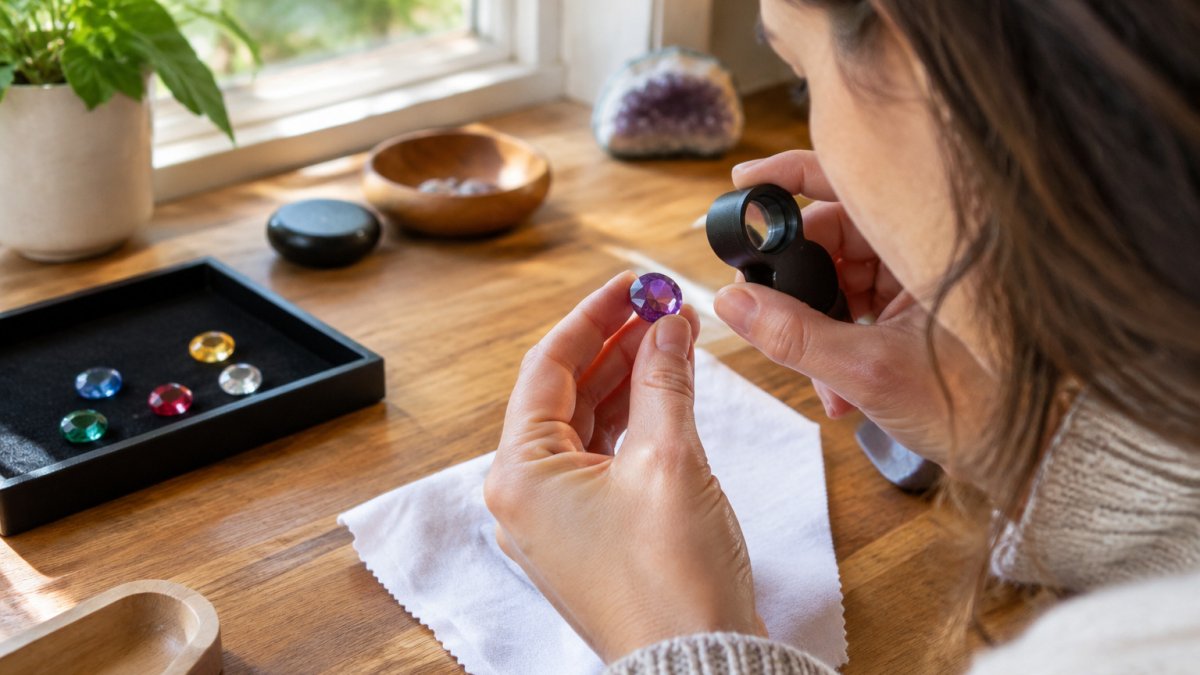
- Write down the basics. Note the gem type if it's known, the carat weight, and any treatment disclosed by the seller.
- Check the color in daylight. Compare the hue, tone, and saturation against photos of similar stones.
- Look for inclusions with a loupe. A 10x jeweler's loupe lets you see the inside. Note how visible any marks are.
- Examine the cut. Turn the stone under a light and look for even facets and good brightness.
- Compare to comparable sales. Look at recent sold prices for stones of the same type, color, and size.
- Estimate a range. Based on your notes, decide on a rough value range rather than a single number.
Watch out: a stone that looks unusually perfect and cheap may be treated, synthetic, or imitation. Ask the seller for written disclosure of any treatment.

Using a Gemstone Value Calculator the Right Way
A gemstone value calculator can give you a starting estimate. Most ask for gem type, carat weight, color grade, clarity, and cut. The result is a rough guide, not a final appraisal.
Use calculators carefully:
- Enter honest grades. Overrating color or clarity inflates the result.
- Check the treatment setting. Treated stones are usually worth less than untreated ones.
- Compare results. Run two or three estimates and look for a consistent range.
Treat the calculator as a way to narrow your options, then confirm with real sales data or a professional.
When You Need a Professional Gemstone Appraisal
A home assessment can tell you a lot, but it cannot confirm identity, detect every treatment, or produce a document anyone else will rely on. That is where a professional appraisal earns its keep.
The five kinds of value people confuse
One of the most common mistakes is treating every number attached to a stone as the same number. They aren't. A qualified appraiser can report several different figures, each answering a different question:
- Market price is what a willing buyer would pay a willing seller for a comparable stone in the current open market. It's the broadest benchmark and usually the highest transaction figure.
- Retail price is what a consumer pays at a jewelry store, including margin, overhead, and any financing or warranty bundled in. It's typically well above resale.
- Resale value is what you could realistically get selling the stone yourself, through a dealer, or at auction. It's usually the lowest figure because it reflects the buyer's need to resell at a profit and the limited pool of buyers.
A common pattern is for a stone to carry an insurance replacement value several times its realistic resale value. If you're selling, ask for a resale or fair market value appraisal, not an insurance one.
What a usable appraisal report should contain
Ask to see a sample before you commission one. A report worth paying for generally includes:
- The appraiser's credentials and any relevant gemological affiliation
- The purpose of the appraisal and the type of value reported
- A full description of the stone: species and variety, weight, measurements, cut style, color description, clarity, and any known treatments
Watch out: an appraisal listing only a dollar figure and a one-line description isn't useful for insurance, resale, or dispute resolution, no matter who signed it.
When visual inspection is not enough
A loupe and good light can reveal a lot, but they cannot settle every question. Laboratory testing is the right next step when:
- You need to confirm whether a stone is natural, synthetic, or an imitation
- You suspect a treatment that is not disclosed, such as fracture filling, diffusion, or heat treatment that affects value
- The origin of the stone materially changes its value and you need a documented opinion
Recognized gemological laboratories issue reports describing what was tested and concluded. Request the report number and confirm it directly with the issuing laboratory rather than relying on a photocopy or a seller's summary.
What to ask before you pay for an appraisal
- What is the purpose of this appraisal, and which type of value will you report?
- What will you do if you cannot determine treatment status with the equipment you have?
- Will you recommend laboratory testing if it is needed, and is that included?
An appraiser who can't answer these plainly isn't the right person for a valuable stone.
Choosing Your Next Step With a Colored Stone
Once you've worked through the factors, decide what to do next. If you're just curious, a home assessment and a few comparable sales may be enough.
Shopping for a stone you can trust starts with the right information. Browse the For Heaven's Sake website for current stock and ask our team about the stones you're considering.
Go Shopping at For Heaven's Sake to explore our crystals, jewelry, and ceremonial supplies.
Frequently Asked Questions
What factors determine the value of a colored gemstone?
The main factors are color (hue, tone, and saturation), clarity and inclusions, cut quality and proportions, carat weight, origin, and whether the stone is natural or has been treated. Color usually carries the most weight for colored stones, because a vivid, evenly distributed color in a desirable hue drives demand. Clarity matters less for some varieties, since many colored gems naturally contain inclusions. Treatment status can change value significantly, so confirm it before estimating price. Rarity and current market demand for a specific variety also influence what a buyer will pay.
Does gemstone color or carat weight affect value more?
For most colored gemstones, color has a bigger influence on value than carat weight. A smaller stone with an intense, pure, well-distributed color can sell for more per carat than a larger stone with a pale or muddy color. Carat weight still matters, because price per carat typically rises as size increases, especially for rarer varieties. The effect of size depends on the gem variety, so compare stones of the same species when judging how much weight contributes to price.
Are online gemstone value calculators accurate?
Online gemstone value calculators can give a rough starting range, but they rarely account for every factor that affects a specific stone. Most rely on a few inputs such as species, carat weight, and general quality grade, and they cannot see inclusions, cut quality, or treatment history. Use a calculator to set expectations, then compare the result against recent sales of similar stones and, for a dependable figure, a professional appraisal. Treat any single number as an estimate with real uncertainty.
What is the difference between a gemstone appraisal and a grading report?
A grading report, issued by a gemological laboratory, identifies the stone, describes its characteristics, and states whether it is natural, synthetic, or treated. It does not usually state a dollar value. A gemstone appraisal is a written opinion of value, prepared by a qualified appraiser, for a stated purpose such as insurance replacement, resale, or estate planning. Many owners need both: the grading report establishes what the stone is, and the appraisal estimates what it is worth for that purpose.
