

Last Updated: November 16, 2026
Quick Summary
The best brass jewelry for spiritual protection is solid brass, chosen for a symbol whose meaning you can explain in a sentence, with a size and construction that suit how often you will wear it. Brass is durable and affordable, and wearers associate its warm golden tone with grounding and everyday strength.
- Confirm the piece is solid brass, since listings that say only brass tone or gold color may be plated.
- Choose a pendant around 1 inch long for slim, everyday wear that sits neatly under a collar.
- Check that the bail is smooth, closed, and wide enough for the chain to move freely.
- Wipe brass pieces after wearing them and store them dry to slow tarnish.
- The Quan Yin pendant is listed at $6.95, the most budget-friendly option in the comparison.
Table of Contents
- Why Brass Is a Popular Choice for Protection Jewelry
- Brass Jewelry Spiritual Benefits: What Wearers Traditionally Associate With It
- Comparing Brass Pendant Styles for Protection
- Brass Protection Necklace: Choosing Length, Placement, and Comfort
- How to Tell Solid Brass From Plated Alternatives
- How to Clean Brass Jewelry and Keep It Looking Good
- Brass Jewelry for Men: Styles, Sizing, and Everyday Wear
- Choosing Your First Brass Protection Piece
- Frequently Asked Questions
Why Brass Is a Popular Choice for Protection Jewelry
Brass is one of the most common metals used in spiritual protection jewelry, and for good reason. It is durable, affordable, and has a warm golden color that many people associate with grounding and everyday strength. At For Heaven's Sake, our Lakewood shop at 2680 Youngfield Street carries a range of solid brass pieces that fit easily into daily life.
Brass is an alloy, mostly copper and zinc. It is a metal many people wear every day.
Brass Jewelry Spiritual Benefits: What Wearers Traditionally Associate With It
Many wearers associate brass with stability, warmth, and personal protection. These associations come from long-standing traditions rather than from any scientific evidence, so it helps to approach them as personal meaning rather than established fact.
Brass is often linked with grounding, the sense of staying centered during a busy or stressful day. Some people also connect its golden tone with confidence and clarity. Others simply like how a symbol feels against the skin and use it as a daily reminder of their intentions.
Comparing Brass Pendant Styles for Protection
Pendants are a simple way to start, and the shape you choose often matters as much as the metal. A useful way to compare brass pendants is to look at the symbolism you want to carry, the size and weight you will actually wear, how the piece is constructed, and how it fits your budget.
Start With the Symbol, Not the Size
Different symbols carry different traditional associations, and matching the symbol to your intention makes a pendant easier to wear consistently.
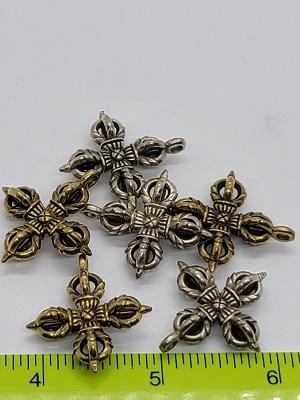
- Double Dorje (vajra): Traditionally associated with stability, clarity, and cutting through confusion. A slim, understated choice for someone who wants a symbol that stays close to the body.
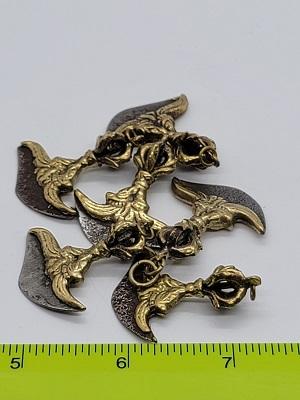
- Kartika with Dorje handle: A ritual implement pairing a curved blade with a dorje handle, traditionally linked with cutting away obstacles. Its larger profile suits wearers who want a more visible piece.
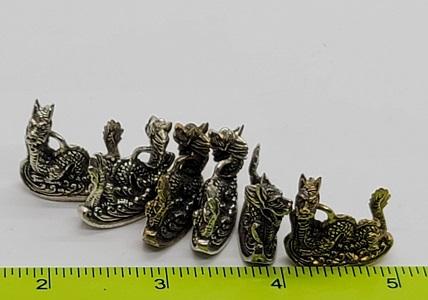
- Dragon Wave: A flowing, energetic motif that many wearers connect with movement, courage, and momentum.
- Goddess of Willendorf: A figure-style symbol that some wearers associate with abundance, grounding, and the body.
- Quan Yin: A figure associated with compassion and calm; a common choice for wearers who want a soothing, protective presence rather than a fierce one.
If you are torn between two symbols, choose the one whose meaning you can explain in a sentence. A pendant you understand is one you are more likely to keep wearing.
Compare Size, Weight, and Construction
Size affects both visibility and comfort. A pendant around 1 inch long tends to sit neatly on most chests and disappear under a collar; pieces around 1-1/2 inches read as more of a statement. Thickness matters too: a 3/8-inch-thick piece feels lighter against the skin than a 1/2-inch-thick one, and a thicker piece can catch on clothing.
Construction details are where solid brass pieces separate themselves. Check the bail, the loop the chain passes through, for a smooth, closed shape with enough room for the chain to move freely. A rough or pinched bail wears through chains faster. Look at the back of the pendant: a solid cast piece usually has a consistent surface, while a stamped or hollow piece may feel thin at the edges.
A Simple Comparison Table
| Pendant | Approx. Size | Price | Symbolic Focus | Best For |
|---|---|---|---|---|
| Double Dorje | 1 in. x 3/8 in. | $9.95 | Stability, clarity | Slim, everyday wear |
| Kartika w/Dorje Handle | 1-1/2 in. x 1 in. x 1/2 in. | $9.95 | Cutting through obstacles | A more visible statement piece |
| Dragon Wave | 1 in. x 1 in. x 1/2 in. | $9.95 | Movement, courage | Compact, bold shape |
| Goddess of Willendorf | 1-1/2 in. x 1/2 in. x 1/2 in. | $9.95 | Abundance, grounding | Figure-style symbolism |
| Quan Yin | 1-1/2 in. x 1/2 in. x 1/2 in. | $6.95 | Compassion, calm | Budget-friendly choice |
Price
Match the Pendant to How You Will Wear It
A pendant you wear daily should be light enough to forget and smooth enough not to snag. A pendant you wear for specific occasions can be larger and more detailed. If you layer necklaces, choose a pendant with a bail wide enough to slide over a clasp or a second chain. If you wear a pendant against bare skin in hot weather, expect more tarnish and plan to wipe it after wear.
Watch out: a pendant that looks balanced in a photo can hang awkwardly if the bail sits off-center or the piece is top-heavy. Try it on a chain at the length you plan to wear before committing.
Pendant, Double Dorje Solid Brass Pendant, Kartika w/Dorje Handle Solid Brass Pendant, Dragon Wave Solid Brass Pendant, Goddess of Willendorf, Solid Brass Pendant, Quan Yin Solid Brass
Brass Protection Necklace: Choosing Length, Placement, and Comfort
Length changes how a pendant feels and where it sits. A shorter chain keeps a pendant close to the collarbone, while a longer one lets it hang lower and move more freely. Try a few lengths in a mirror before committing, and pay attention to how the piece sits when you bend or sit down.
Comfort matters just as much as meaning. A pendant you forget you are wearing is usually one you will keep wearing. Choose a size that feels balanced on your neck, and check that the bail (the loop the chain passes through) is wide enough to move freely.
How to Tell Solid Brass From Plated Alternatives
Solid brass and plated pieces can look alike in photos, so it is worth checking a few things before you buy. Brass itself is an alloy of copper and zinc, and the ratio varies by manufacturer. That variation matters for color, weight, and how the piece ages, and it matters for anyone with sensitive skin.
Check the Material Disclosure First
Start with what the seller states. Reputable shops will say whether a piece is solid brass, brass-plated, or brass-finished over another metal. The listings describe each pendant as solid brass. If a listing says only "brass tone" or "gold color," treat it as plated until proven otherwise.
Look for Signs of Plating
Plated jewelry has a thin layer of brass or another finish over a base metal. Signs to check:
- Edges and recesses: Plating wears first at high-friction points, the bail, clasp, and the edges of a design. A lighter or different-colored metal showing through is a strong sign of plating.
- Weight: Solid brass feels dense for its size. A plated piece with a hollow or lightweight base feels noticeably lighter in the hand.
- Wear patterns: On a used piece, look for patchy color change rather than an even patina. Even darkening is normal tarnish; patchy light spots suggest plating wear.
- Marks and stamps: Some solid pieces carry a maker's mark or metal stamp. Absence of a mark is not proof of plating, but a clear mark is a useful confirmation.
Consider Skin Sensitivity and Composition
Brass contains copper, and some people are sensitive to copper or to the zinc in certain alloys. If you have known metal sensitivities, check with your doctor before wearing a metal piece daily.
Check Finish, Clasp, and Construction Quality
- Finish: A good brass finish is even, with no sharp burrs or rough patches. Run a finger along the edges; a quality piece feels smooth.
- Clasp and bail: A clasp should open and close with a firm snap and no wobble. A bail should be closed, smooth, and wide enough for the chain to move without binding.
- Chain attachment: Look at how the pendant connects to the chain. A soldered or securely closed loop lasts longer than an open hook that can bend.
- Consistency: On a solid piece, color and surface should be consistent front and back. A different texture or color on the back can indicate a plated or composite construction.
Ask Before You Buy
A short list of questions separates transparent sellers from vague ones: What is the base metal? Is the piece solid or plated? Is there a finish or lacquer, and how should it be maintained? What is the return policy if the finish wears prematurely? Clear answers are a better quality signal than any photo.
How to Clean Brass Jewelry and Keep It Looking Good
Brass tarnishes over time, especially with sweat, lotions, and humidity. Tarnish is a surface change and does not mean the piece is damaged. Wipe pieces after wearing them, and store them in a dry place away from other metals that can scratch the surface.
Regular light cleaning keeps brass looking its best far longer than occasional heavy scrubbing. Avoid harsh chemicals and abrasive pads, which can wear away the finish.
Brass Jewelry for Men: Styles, Sizing, and Everyday Wear
Brass pendants can suit men who want something meaningful without a lot of shine. The Double Dorje and Dragon Wave pendants have clean, simple lines that suit everyday clothing. Pair a pendant with a chain length that sits just below the collar for a balanced look.
Sizing matters most for comfort. A pendant around 1 inch long tends to sit neatly on most men's chests, while larger pieces make more of a statement. Choose based on how visible you want the piece to be.
Choosing Your First Brass Protection Piece
Start with the pendant that speaks to you, not the one with the most symbolism on paper. Decide whether you want a slim everyday piece or a more visible one, then pick a chain length that fits your collar. If budget is a concern, the Quan Yin pendant at $6.95 is a practical place to begin.
If you are unsure, visit our Lakewood shop at 2680 Youngfield Street, Lakewood, Colorado 80215. Our team can help you compare pieces in person and find the one that feels right for you.
Frequently Asked Questions
What is brass good for spiritually?
Brass is traditionally associated with warmth, grounding, and a sense of personal protection in many spiritual and devotional traditions. Its golden tone is often linked with positive energy and confidence. These associations come from belief and cultural practice rather than scientific evidence, so the meaning you attach to a piece matters most. Many wearers choose a symbol, such as a dorje or a Quan Yin pendant, that already carries significance for them.
Who should not wear brass?
Some people may have sensitivities to metals, so it is worth checking the composition before buying. If you notice redness, itching, or a green mark on the skin, remove the piece and wash the area. Choosing solid brass rather than a thin plated finish can reduce the chance of contact with base metals underneath. Check with your doctor if you have a known metal allergy.
Can brass jewelry be worn every day?
Yes, solid brass pendants and necklaces are sturdy enough for daily wear, though they can tarnish over time with exposure to moisture, perfume, and sweat. Removing jewelry before showering, swimming, or exercising helps it keep its finish. Pieces with a simple pendant shape tend to hold up better in everyday wear than delicate filigree. A regular light polish keeps the surface looking even.
How do you care for brass jewelry?
Wipe brass with a soft cloth after wearing it to remove oils and moisture. For tarnish, a gentle brass polish or a mild solution of warm water and a small amount of dish soap works well, followed by drying thoroughly. Avoid harsh chemicals, abrasive scrubbers, and storing pieces with rubber or damp materials. Store each piece separately in a dry pouch to prevent scratches and discoloration.
