

Last Updated: October 30, 2026
Quick Summary
Crystal mining reshapes local ecosystems by clearing vegetation and topsoil, which causes habitat destruction and erosion that often goes unrehabilitated. Runoff from active and abandoned sites carries sediment and heavy metals into streams and groundwater, and these metals bioaccumulate up the food chain long after extraction stops.
- Surface mining clears trees and topsoil for pits, roads, spoil piles, and staging areas.
- Many small operations never rehabilitate the site, leaving damage in place indefinitely.
- Sulfide-bearing rock exposed to air and water can generate acidic drainage that mobilizes metals.
- Artisanal and small-scale mining is frequently unpermitted, and cumulative effects can rival industrial damage.
- Quartz and amethyst are often recovered with low chemical input, unlike lithium-bearing minerals.
Table of Contents
- How Crystal Mining Reshapes the Land
- Water Pollution and Heavy Metal Contamination
- The Environmental Impact of Mineral Mining at Small and Large Scales
- Biodiversity Loss and Bioaccumulation in the Food Chain
- Ethical Crystal Sourcing Practices That Reduce Harm
- How to Verify Crystal Origin Before You Buy
- Reclamation, Regenerative Mining, and What Comes After the Pit
- Choosing Crystals With a Clearer Conscience in Lakewood
- Frequently Asked Questions
How Crystal Mining Reshapes the Land
Crystal mining is the extraction of mineral specimens, quartz, amethyst, and other crystalline materials from the earth, and its impact on local ecosystems starts with the ground itself. The first thing to understand: a crystal mine is not a tidy hole. It is a decision about land, and that decision has consequences that outlast the stone on your shelf.
Deforestation and Habitat Destruction
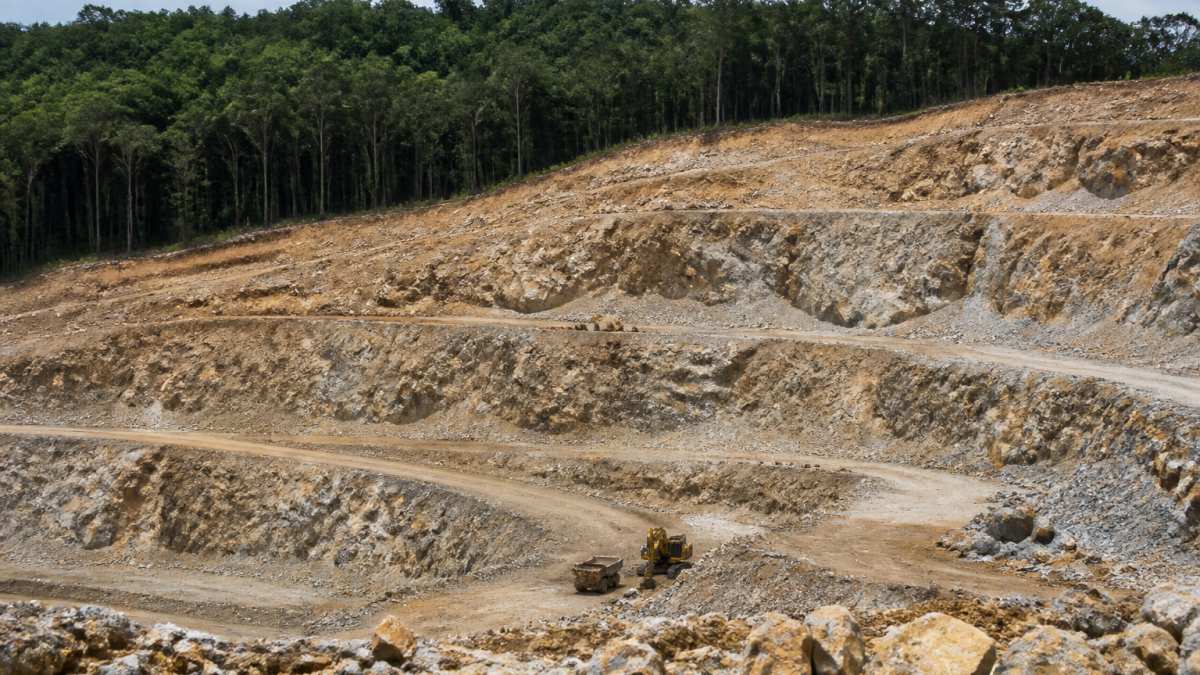
Surface mining removes whatever sits on top of the deposit. In forested regions, that means trees come down first, and the cleared footprint often extends well beyond the pit itself for access roads, spoil piles, and staging areas. The loss is not just timber. It is canopy, nesting ground, and shade, and the species that depended on all three do not simply relocate.
Soil Erosion and Land Degradation
Stripped of vegetation, exposed soil has nothing holding it in place. Rain carries topsoil off-site, and the thin, slow-forming layer that supports local plant life is gone in a season. Land degradation follows: compacted ground, lost seed banks, and slopes that shed water instead of absorbing it. Many small operations never rehabilitate the site afterward, which leaves the damage in place indefinitely.
Water Pollution and Heavy Metal Contamination
Water is where crystal mining's footprint travels furthest. Runoff from an active or abandoned site carries sediment and whatever minerals the exposed rock releases, and that load does not stay put.
Toxic Runoff, Sedimentation, and Groundwater
Sedimentation is the most visible problem. Fine particles wash into streams, smother gravel beds where fish spawn, and cloud water that downstream communities rely on. Heavy metal contamination is the quieter concern: sulfide-bearing rock exposed to air and water can generate acidic drainage that mobilizes metals into waterways. Groundwater contamination happens when that drainage seeps downward, and once an aquifer is affected, cleanup is slow and expensive. The U.S. Environmental Protection Agency's abandoned mine lands program documents how long these sites can leach after mining stops.
The Environmental Impact of Mineral Mining at Small and Large Scales
Scale changes the character of the damage, but it is not the only variable. The mineral itself matters just as much. A quartz specimen and a lithium-bearing pegmatite can come out of the same kind of ground and leave wildly different footprints, because the extraction method, the processing chemistry, and the volume of waste rock all depend on what is being pulled out.
Industrial Operations: Volume, Tailings, and Permitting
Large-scale operations move enormous volumes of rock to recover a relatively small fraction of marketable material. The waste, overburden, tailings, and processing residue, is the part that rarely makes it into the marketing photos. Industrial mines are subject to federal and state environmental regulation, including permitting under the Clean Water Act and reclamation requirements that vary by state. That oversight is real, but it is also uneven: bonding requirements may not cover the true cost of closure, and enforcement depends on agency budgets and political will.
Artisanal and Small-Scale Mining: The Oversight Gap
Artisanal and small-scale mining is frequently unpermitted and unmonitored. Miners working by hand may wash ore directly in rivers, abandon pits without backfilling, and use methods that leave heavy metals and processing waste in place. The per-site footprint is smaller, but the cumulative effect across many sites can rival industrial damage. A common pattern in gemstone and specimen mining regions is a patchwork of small pits, each too minor to trigger review, that together strip vegetation from a whole slope.
Why the Mineral Type Changes the Math
Not all crystals are extracted the same way. Quartz and amethyst are often recovered from pegmatites and vugs with relatively low chemical input, the rock is broken, the specimens are removed, and the leftover material is mostly inert. Lithium-bearing minerals, by contrast, are increasingly recovered through hard-rock spodumene mining or brine evaporation, both of which carry distinct water and land-use concerns. Copper and other metal-bearing minerals that host collector specimens may come from mines whose primary product is metal, meaning the crystal trade is a byproduct of a much larger industrial footprint.
The article breaks down how scale and mineral type change the footprint of crystal extraction.
| Factor | What the article says | Note |
|---|---|---|
| Large-scale operations | Move enormous volumes of rock for a small fraction of marketable material | Waste includes overburden, tailings, processing residue |
| Large-scale oversight | Subject to federal and state regulation, including Clean Water Act permitting | Bonding may not cover true closure cost |
| Artisanal and small-scale mining | Frequently unpermitted and unmonitored | Per-site footprint smaller, cumulative effect can rival industrial damage |
| Quartz and amethyst | Often recovered from pegmatites and vugs with low chemical input | Leftover material mostly inert |
| Lithium-bearing minerals | Recovered through hard-rock spodumene mining or brine evaporation | Distinct water and land-use concerns |
| Copper and other metal-bearing minerals | Crystal trade may be byproduct of a larger metal mine | Much larger industrial footprint |
Biodiversity Loss and Bioaccumulation in the Food Chain
Habitat destruction removes species directly. Contamination removes them slowly, and the slow path is the one that is hardest to see and hardest to reverse.
Direct Loss: What Disappears First
When a pit is cut and access roads are pushed in, the first losses are local and immediate: plants, insects, and the small vertebrates that cannot move far. Species that need contiguous habitat, certain amphibians, ground-nesting birds, and specialized pollinators, are the most vulnerable because a cleared strip can isolate a population even if the surrounding forest remains. The edge effect matters too: the newly exposed boundary dries out adjacent habitat, so the functional loss extends past the physical footprint.
The Bioaccumulation Mechanism
Heavy metals that enter a watershed do not break down. They accumulate in organisms, and concentrations rise at each step up the food chain, a process called bioaccumulation when it happens within a single organism and biomagnification when it concentrates across trophic levels. The metals most often associated with mine drainage include cadmium, lead, arsenic, and mercury, each with different mobility and toxicity profiles. A metal released at a mine site can reach fish, birds, and mammals at levels far above what the water itself contains, which is why water-quality testing alone can understate the ecological risk.
Why This Matters for Crystal Buyers
The bioaccumulation story is the strongest argument against treating crystal mining as a low-impact niche. A stone that comes from a site with poor drainage controls can be part of a contamination chain that reaches far beyond the pit. The U.S. Geological Survey's work on mining and the environment tracks these pathways in watersheds affected by mineral extraction, and the pattern is consistent: the ecological cost shows up downstream and years later.
Ethical Crystal Sourcing Practices That Reduce Harm
Ethical crystal sourcing is the practice of buying stones with verified supply chains, known origins, and documented environmental and labor standards. For a practical walkthrough of applying these standards, see this buyer's guide to ethically sourced crystals. It is not a certification you can spot at a glance, and no single label guarantees it. What it looks like in practice:
- Suppliers who can name the mine or region, not just the country
- Documentation of reclamation commitments at the extraction site
- Refusal to stock stones from operations with known water or labor violations
- Preference for small producers who backfill and replant
How to Verify Crystal Origin Before You Buy
Verification starts with the seller, not the stone. Ask directly where the specimen was mined and whether the supplier can document it.
Look for chain-of-custody paperwork, supplier disclosures, and any third-party sourcing statements a shop publishes. A trusted reference like The Crystal Bible can help you identify specimens and their properties as you research. Watch out: a "made in" label tells you where a stone was cut or polished, not where it was extracted, and sellers sometimes blur that distinction.
Reclamation, Regenerative Mining, and What Comes After the Pit
Reclamation is the process of restoring mined land to a stable, usable condition after extraction ends. Done well, it means regrading slopes, replacing topsoil, and replanting native species. Done poorly, it means a fence around a hole.
Regenerative mining goes further, treating the site as something to improve rather than merely stabilize. That can include restoring wetlands, rebuilding soil health, and planning closure before extraction begins. The gap between the two approaches is mostly a question of intention and funding, and buyers who ask about it push the industry toward the better version.
Choosing Crystals With a Clearer Conscience in Lakewood
Every stone has a supply chain, and every purchase is a small vote about how that chain operates. Ask where it came from. If you want a simple place to start, a clear quartz tumbled stone is an easy first pick. Ask what happened to the land. Ask whether the seller knows.
We opened For Heaven's Sake in 2000 as a minority woman-owned shop. If you are local, our guide to where to buy crystals in Lakewood covers what to look for in person.
Frequently Asked Questions
How does crystal mining affect soil and water quality?
Crystal mining strips away topsoil and vegetation, which leaves bare ground exposed to rain and wind. That causes soil erosion and sends sediment into nearby streams, smothering aquatic habitat. Excavated rock and tailings can also release heavy metals and other contaminants that seep into groundwater and surface water. The result is poorer water quality, degraded soil that takes years to recover, and stress on the plants and animals that depend on both.
Are there ethical standards for sourcing healing crystals?
Ethical sourcing usually comes down to a seller's own practices. Look for retailers who ask suppliers about mine location, labor conditions, and land restoration, and who are willing to share what they know. Some sellers work with fair trade or responsible mining programs. Ask direct questions about where a stone came from and how the site is managed; a transparent answer is a better signal than a vague label.
How can consumers identify sustainably sourced crystals?
Start by asking the retailer how to verify crystal origin: country and region, the type of mine, and whether the site is reclaimed after extraction. Sustainable sourcing also shows up in documentation, supplier relationships, and honest limits (no one can trace every stone perfectly). Buy from sellers who describe their supply chain in plain terms and who carry stones from small, regulated operations. If a shop cannot say anything about origin, treat that as a reason to keep asking.
Does crystal mining contribute to habitat loss for local wildlife?
Yes. Clearing land for mine pits, access roads, and processing areas removes the vegetation and shelter that wildlife depends on, and it fragments the remaining habitat into smaller pieces. Sedimentation and contaminated runoff further degrade streams that fish and amphibians need. Small-scale operations can add up across a region, so the cumulative footprint on local ecosystems is often larger than any single mine suggests.
The crystals on a shelf carry a history most shoppers never see: cleared hillsides, sedimented streams, and land left unrestored. We would rather you ask hard questions than buy blind. At For Heaven's Sake, we stock a curated selection of crystals and metaphysical supplies, host psychic fairs and professional readings, and welcome beginners who want to learn before they buy. Get started with For Heaven's Sake and build a collection you can feel good about.
