

Last Updated: November 14, 2026
Quick Summary
Authentic brass jewelry is a durable choice because solid brass is a copper and zinc alloy with no hollow core and no thin plating, so scratches stay shallow and bends can often be eased back. The metal itself does not rot, crack, or fall apart under normal wear, and tarnish can be polished off repeatedly.
- Most jewelry brass falls in a range of roughly 60 to 90 percent copper, with the rest zinc.
- A brass tone or brass finish label often means plating, not solid brass, so ask before you buy.
- Wipe brass with a dry polishing cloth after each wear and store it in a sealed bag or lined box.
- Solid brass jewelry can last for decades with basic care, though any lacquer coating has a shorter shelf life.
- Our Lakewood shop at 2680 Youngfield Street carries solid brass pendants.
Table of Contents
- What Makes Authentic Brass Jewelry a Durable Choice
- Durability on Paper: What Everyday Wear Actually Does to Brass
- Does Brass Jewelry Tarnish? Oxidation, Patina, and Green Marks
- How to Keep Brass Jewelry From Tarnishing
- How Long Does Brass Jewelry Last?
- Brass vs Sterling Silver, Stainless Steel, and Gold-Plated Jewelry
- Is Brass Jewelry Good Quality? A Practical Buying Guide
- Choosing a Brass Piece at For Heaven's Sake
- Frequently Asked Questions
What Makes Authentic Brass Jewelry a Durable Choice
Solid brass holds up because of what it is: a copper and zinc alloy with no hollow core, no thin plating, and no soft filler metal underneath. Why authentic brass jewelry is a durable choice comes down to metallurgy, not marketing.
Brass is a workhorse metal. It takes knocks, bends before it snaps, and can be polished back to a warm gold tone again and again. The catch is that brass changes color over time, whether that's a problem or a feature depends on what you want.
What Brass Is and How It Is Made
Brass is a metal alloy made by melting copper together with zinc. The copper gives brass its warm gold color. The zinc adds strength and makes the metal easier to cast and shape.
Most jewelry brass falls in a range of roughly 60 to 90 percent copper, with the rest zinc. Jewelers call this jeweler's brass or raw brass.
How a piece is made matters too. Cast brass is poured into a mold and holds fine detail. Stamped or cut brass is pressed from sheet metal. Both can last decades. What kills durability is a thin brass coating over a cheaper core, which wears through fast.
How Alloy Composition and Manufacturing Affect Longevity
More copper means a warmer color and easier polishing. More zinc means a harder, more rigid piece that resists bending but can feel stiffer.
Manufacturing decides the rest. A solid cast piece has the same metal all the way through, so scratches stay shallow and can be buffed out. A plated piece has only a thin brass skin. Once that skin wears away, the base metal shows through and the piece is finished.
Watch out: a "brass tone" or "brass finish" label often means plating, not solid brass. Ask before you buy.
Durability on Paper: What Everyday Wear Actually Does to Brass
Durability is not one property. A brass piece can resist bending yet scratch easily, or hold its shape for years while its surface coating wears away in months. The useful way to judge a brass piece is to separate four kinds of wear and ask how the piece handles each one.
Resistance to bending and deformation. Solid brass is malleable: under a hard knock it tends to bend rather than snap, which is why a dropped brass pendant may come back slightly out of shape instead of cracking.
Resistance to scratching. Brass is softer than stainless steel and most gold alloys used in jewelry, so surface scratches are normal, especially on rings and bracelets that contact keys, desks, and door handles. On solid brass, scratches stay shallow and cosmetic because there is no thin skin to break through; a jeweler's cloth or light polish can blend them out.
Resistance to corrosion and tarnish. Brass does not rust the way iron does, but the copper reacts with oxygen, moisture, and sulfur compounds in the air, darkening the surface into tarnish and eventually patina. This is surface chemistry, not structural decay: a solid brass piece left unworn in humid air will tarnish, not crumble.
Resistance of the finish. It wears at high-contact points first, the inside of a ring, the edge of a pendant, the clasp of a bracelet. Once the coating thins, the brass underneath patinas at a different rate than the coated areas, which is why older pieces often look blotchy rather than evenly aged.
In daily wear, structural problems are rare and finish problems are common. Most brass jewelry that looks worn out has not failed as metal; it has lost its coating or built up tarnish no one removed. That is why the care routine below focuses on moisture control and periodic polishing rather than protecting the metal from breaking.
Does Brass Jewelry Tarnish? Oxidation, Patina, and Green Marks
Yes, brass jewelry tarnishes. That is normal, and it is not damage. Tarnish is oxidation: the copper in the alloy reacts with oxygen, moisture, and sulfur in the air and darkens the surface.
Many people call the result a patina. Some wearers love the aged, antique look and never polish it off. Others want the bright gold shine back, which takes only a cloth and a few minutes.
Green marks are the other common question. When brass meets sweat and skin oils, it can leave a faint green tint on skin. It is harmless and washes off. It shows up more on people with acidic skin chemistry, in hot weather, and on pieces worn tight against the skin.
How to Keep Brass Jewelry From Tarnishing
The best way to keep brass jewelry from tarnishing is to control moisture and contact. Dry the piece after wear, store it away from humid air, and polish it on a regular schedule before tarnish builds up.
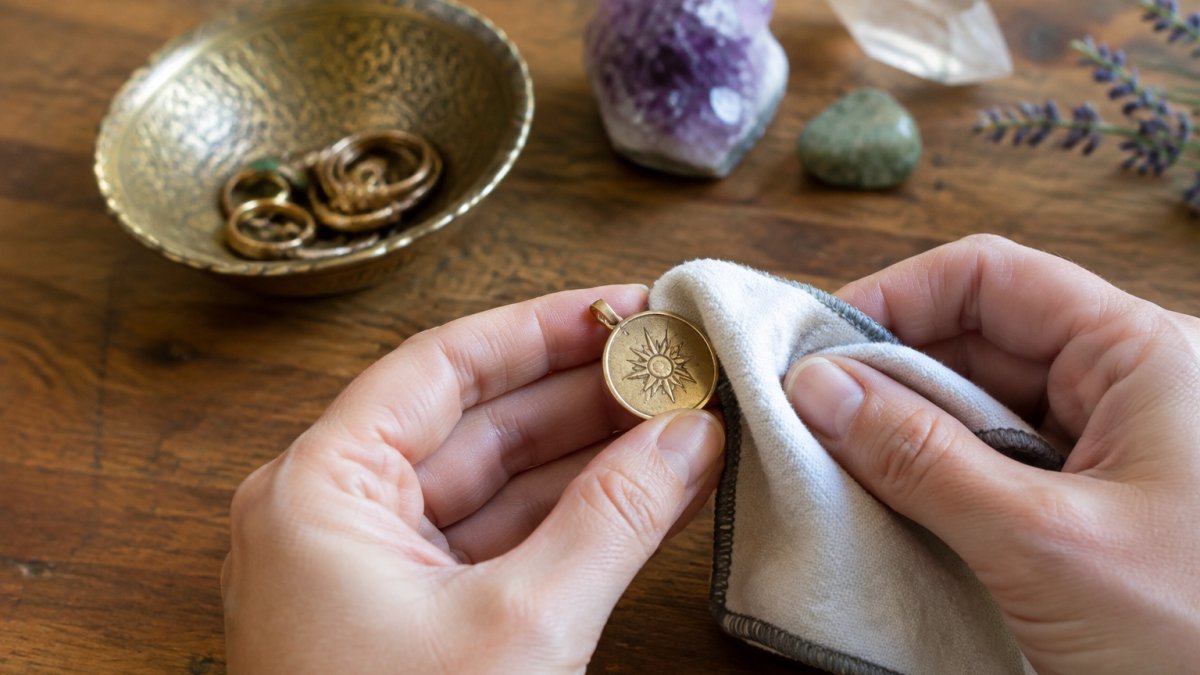
A simple routine:
- Wipe the piece with a dry polishing cloth after each wear
- Keep brass away from perfume, lotion, and hairspray
- Store pieces in a sealed bag or a lined box, not an open dish by a window
- Polish with a brass polishing cloth every few weeks
- Skip harsh cleaners and abrasive scrubs, which scratch the surface
Care by Jewelry Type and Exposure
Different pieces need different care. A pendant that sits over clothing sees far less sweat than a ring or bracelet.
| Jewelry Type | Exposure Level | Care Routine |
|---|---|---|
| Pendant on a chain | Low | Wipe monthly, polish every few months |
| Earrings | Medium | Wipe after each wear, keep dry |
| Bracelet | High | Wipe after wear, polish every few weeks |
| Ring | Highest | Dry after handwashing, polish often |
How Long Does Brass Jewelry Last?
Solid brass jewelry can last for decades with basic care, but "last" means different things for the metal and for the finish. The metal itself does not rot, crack, or fall apart under normal wear, it changes color and scratches, both surface issues you can manage.
The metal. A solid brass piece has no thin skin to wear through. Scratches stay shallow, bends can often be eased back, and tarnish can be polished off repeatedly without removing meaningful thickness. A piece worn daily for years will accumulate fine scratches and a duller sheen between polishings, but that is cosmetic.
The coating. Many brass pieces are sold with a lacquer or similar coating to slow tarnish and hold a bright shine.
Polishing versus refinishing. Polishing removes tarnish and light scratches from bare brass with a soft cloth or mild brass polish; refinishing means restoring a protective coating after the old one has worn away.
What shortens life. The biggest accelerators are moisture left on the piece, repeated contact with perfume, lotion, hairspray, and household cleaners, and storage in humid or open air.
What extends life. Wipe the piece dry after wear, keep it away from chemistry, store it sealed, and polish on a schedule before tarnish builds up. For coated pieces, avoid abrasive polishes that strip the finish faster, and ask a jeweler about refinishing when the coating looks patchy.
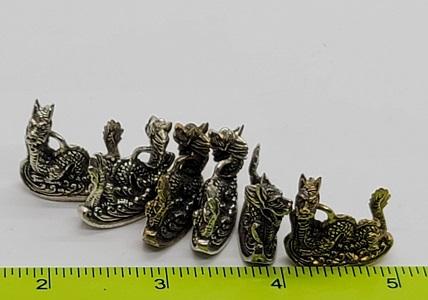
Pendant, Dragon Wave Solid Brass is a good example of what a solid piece looks like in practice: real weight and thickness, the kind that takes a polish and keeps going. The care question for a piece like this is not whether the metal will survive but how often you want to bring the shine back.
Watch out: harsh cleaners, abrasive scrubs, and ultrasonic cleaning can strip a lacquer coating or scratch bare brass. If a piece has a coating you want to keep, clean it gently and skip the abrasives.
Brass vs Sterling Silver, Stainless Steel, and Gold-Plated Jewelry
Brass sits in a useful middle ground. It costs far less than sterling silver or solid gold, and it holds detail better than most plated pieces.
- Sterling silver is softer and tarnishes too, but it polishes to a bright white shine.
- Stainless steel is harder and resists scratches best, but it has a cooler, grayer look.
- Gold-plated jewelry looks rich up front, but the plating wears through with daily wear.
If you're weighing metals side by side, our authentic gemstone jewelry store Denver buyer's guide walks through what to check before you commit.
Is Brass Jewelry Good Quality? A Practical Buying Guide
Brass jewelry is good quality when it is solid brass, well finished, and honestly labeled. Quality comes down to what's inside the piece, not how shiny it looks in the case.
Use this checklist before you buy:
- Ask whether the piece is solid brass or plated
- Check the weight; solid brass feels substantial
- Look for smooth edges and clean detailing
- Confirm whether a lacquer coating is applied
- Ask how to care for it and whether it can be re-polished
If a seller can't answer those questions, that tells you something. For more on spotting treatments and fakes, see our guide on how to tell if a gemstone is heat treated.
Skin Sensitivity and Safe-Use Guidance
Most people wear brass without issue. The green tint some notice is harmless and washes off.
If you have sensitive skin, keep brass off broken skin and out of prolonged contact with sweat. Choose pendants over rings if you react easily. Stop wearing any piece that causes redness or itching, and check with a doctor if a reaction persists.
Choosing a Brass Piece at For Heaven's Sake
Our Lakewood shop at 2680 Youngfield Street carries solid brass pendants.
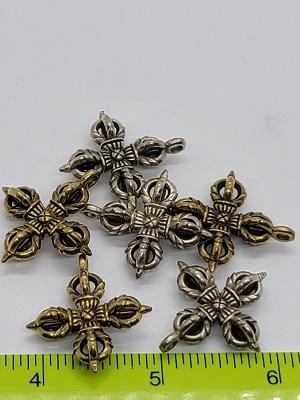
Our brass jewelry and accessories picks for spiritual practice include pieces like the Double Dorje solid brass pendant, sized at roughly 1 inch long by 3/8 inch thick and priced at $9.95. It is a small, sturdy piece that takes daily wear in stride.
Brass rewards a little attention. Wipe it down, store it dry, and polish it now and then, and a solid piece will stay with you for years. If you want help picking the right one, For Heaven's Sake carries solid brass pendants in our Lakewood shop, with friendly guidance on care and wear. Visit us to see the weight and finish for yourself.
Frequently Asked Questions
How long will brass jewelry last?
Solid brass jewelry has no plating to wear through, so its lifespan depends on care rather than a coating. A piece worn daily and cleaned regularly can stay in rotation for years; one left in a damp bathroom or exposed to perfume and chlorine will dull faster. Store it dry, wipe it after wear, and polish when the surface darkens. Thinner, hollow pieces flex and bend sooner than solid cast pieces, so check the construction before you buy.
What are the downsides of wearing brass jewelry?
Brass oxidizes, so it darkens over time and needs occasional polishing to keep its shine. Some people notice a green tint on skin where the metal meets sweat, which is a normal reaction between copper in the alloy and moisture, not a sign of poor quality.
Is brass jewelry worth buying?
For everyday pendants and casual pieces, brass offers solid durability at a low price. The solid brass pendants at For Heaven's Sake run $9.95.
Does 100% brass jewelry turn green?
Pure brass is an alloy of copper and zinc, and the copper reacts with sweat and moisture to leave a green mark on skin. That discoloration sits on the surface and washes off; it does not damage the jewelry. A lacquer coating reduces the reaction, and keeping the piece dry and wiping it after wear limits it further.
