

Last Updated: October 22, 2026
Quick Summary
Tarot journaling prompts guide you to pull tarot cards and write reflections about their meaning in your life, turning the cards into mirrors for self-discovery. This practice helps you understand your patterns, fears, strengths, and choices through honest questioning and journaling over time.
- Pull one card daily and use prompts like 'What does this card tell me about my energy today?' to anchor your reflection
- Major Arcana cards represent life lessons and transformation, while Minor Arcana suits address everyday situations in work, emotions, relationships, and creativity
- Shadow work prompts help you explore difficult emotions and beliefs you usually avoid, deepening self-awareness
- Track repeated cards and themes monthly or quarterly to reveal patterns and watch how your insights deepen over weeks and months
- Consistency matters more than length; the real power emerges when you review entries over time and see patterns emerge
Table of Contents
- What Is Tarot Journaling and Why It Works for Self-Discovery
- Tarot Journaling for Beginners: Getting Started
- Daily Tarot Journal Prompts for Reflection
- Tarot Questions for Self-Discovery by Card and Suit
- Tarot Journal Examples: A Complete Sample Reading and Entry
- Shadow Work Prompts: Exploring Your Inner Feelings
- Common Mistakes to Avoid in Your Tarot Journaling Practice
- Tracking Themes and Reviewing Your Entries Over Time
- Frequently Asked Questions
What Is Tarot Journaling and Why It Works for Self-Discovery
Tarot journaling prompts guide the practice of pulling tarot cards and writing reflections about what they mean in your life. The cards become mirrors, and your journal becomes a record of self-discovery over time.
This isn't fortune-telling, it's self-exploration. Sitting with a card and asking honest questions helps you understand your present, choices, patterns, fears, and strengths.
Tarot Journaling for Beginners: Getting Started
Starting a tarot journaling practice requires no special skills, just a deck, a journal, and honesty.
What You'll Need
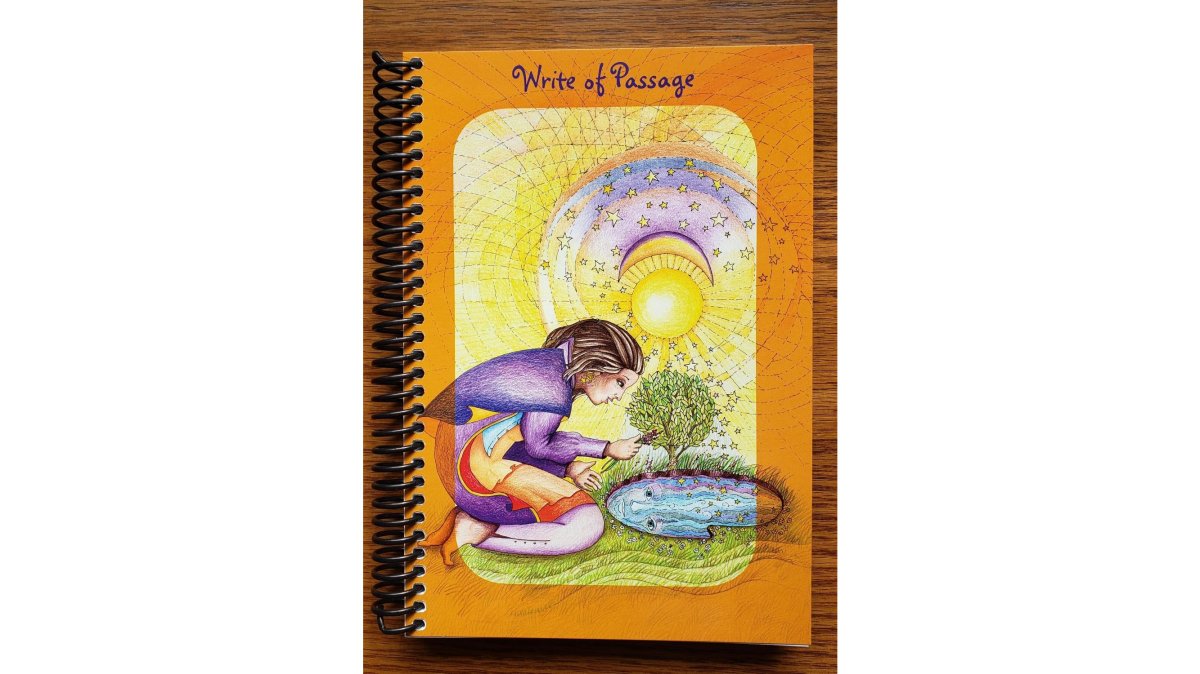
A tarot deck is essential. If you're new, we recommend Your First Tarot, based on the classic Rider-Waite-Smith system with keywords on each card. For your journal, any notebook works; for a guided experience, Journal, Write of Passage Spiral bound combines journaling prompts with space for reflection.


You'll also want a quiet space to focus for 10-15 minutes, a pen you enjoy, and an open mind.
Your First Card Pull
Sit quietly and think about what you want to explore, a specific question ("What do I need to know about this decision?") or something broader ("What am I not seeing here?").
Shuffle however feels natural, pull one card, and don't overthink it. Read the keyword, then ask: What does this card show me about my situation? Write without censoring yourself, length doesn't matter, honesty does.
Daily Tarot Journal Prompts for Reflection
A daily card pull takes five minutes but anchors your day, and these tarot journaling prompts guide your reflection: Pull one card each morning and use these prompts to guide your reflection:
- What does this card tell me about my energy today?
- Where in my life right now do I see this card's message?
- What is this card inviting me to notice or do differently today?
- How does this card relate to something I'm worried about or excited about?
- What strength or resource does this card remind me I have access to?
- If this card were advice from someone I trust, what would it be telling me?
- What would change if I actually believed what this card is showing me?
- Where am I resisting this card's message, and why?
You don't need to answer every question. Pick the one that resonates and write as long as feels natural. Consistency matters more than length; over time, themes emerge that a single deep dive might miss.
Tarot Questions for Self-Discovery by Card and Suit
The tarot deck divides into the Major Arcana (22 cards about big life themes) and the Minor Arcana (56 cards about everyday situations).
Major Arcana: Life Lessons and Transformation
Major Arcana cards represent turning points, lessons, and transformation, when one appears, it's often pointing to something significant.
The Fool speaks to new beginnings and taking risks:
- What am I being invited to begin, even though it scares me?
- Where am I playing it too safe?
- What would I do if I trusted myself more?
The Magician represents personal power and the ability to create:
- What resources or skills am I underusing?
- What do I want to manifest right now?
- How am I more capable than I believe?
The High Priestess calls you to listen to your intuition:
- What is my intuition telling me that I'm ignoring?
- Where do I need to trust myself more?
- What hidden knowledge am I ready to discover?
The Empress embodies creativity, nurturing, and abundance:
- What do I want to create or bring into being?
- How am I nurturing myself and others?
- Where can I be more generous?
The Emperor represents authority, structure, and control:
- Where do I need firmer boundaries?
- What responsibility am I ready to take on?
- How can I bring more order to my life?
The Hierophant speaks to tradition, learning, and spiritual guidance:
- What beliefs am I ready to examine or release?
- Where do I need wisdom or mentorship?
- Which traditions serve me, and which don't?
The Lovers explores relationships, choices, and alignment:
- What choice am I facing, and what does my heart want?
- Where in my relationships am I being authentic?
- What am I being called to align with?
The Chariot represents willpower, momentum, and moving forward:
- What am I ready to commit to and push toward?
- Where am I stalling, and what would get me moving?
- How can I harness my determination?
Strength speaks to inner power, patience, and resilience:
- Where do I need to be gentler with myself?
- What challenge am I stronger than I realize?
- How am I growing through difficulty?
The Hermit calls for introspection and truth:
- What do I need to understand about myself?
- Where do I need solitude for clarity?
- What inner wisdom am I ready to access?
Wheel of Fortune represents cycles, destiny, and perspective:
- What cycle am I in, and where is it heading?
- How can I work with change instead of fighting it?
- What perspective am I missing?
Justice explores accountability, truth, and balance:
- Where do I need to be more honest with myself?
- What am I responsible for here?
- How can I create more balance in my life?
The Hanged Man represents pause, surrender, and new perspectives:
- What if I stopped trying so hard and let go?
- What new perspective is available if I shift my viewpoint?
- Where am I being called to wait?
Death speaks to endings, transformation, and release:
- What am I ready to let go of?
- How am I being asked to change?
- What new chapter is beginning?
Temperance explores balance, integration, and patience:
- Where in my life am I out of balance?
- What opposing parts of myself am I integrating?
- Where do I need more patience?
The Devil represents patterns, shadow work, and what binds us:
- What pattern am I stuck in, and how did I create it?
- What am I not acknowledging about myself?
- Where am I giving my power away?
The Tower symbolizes sudden change, truth, and breakthrough:
- What illusion is crumbling in my life?
- What truth am I finally seeing?
- How might this disruption serve me?
The Star embodies hope, inspiration, and clarity:
- What am I genuinely hopeful about?
- What inspires me to be better?
- What direction is calling to me?
The Moon speaks to intuition, mystery, and the subconscious:
- What am I afraid to look at directly?
- What does my intuition know that my mind hasn't caught up to?
- Where am I called to trust the unknown?
The Sun represents joy, success, and clarity:
- What am I genuinely happy about right now?
- Where am I experiencing success?
- What brings me authentic joy?
Judgement explores awakening, calling, and life purpose:
- What am I being called toward?
- How have I grown or changed recently?
- What is my deeper purpose?
The World symbolizes completion, wholeness, and fulfillment:
- What have I completed or accomplished?
- Where do I feel whole and integrated?
- What cycle has ended, and what begins next?
Minor Arcana by Suit: Pentacles, Cups, Swords, and Wands
The Minor Arcana speaks to everyday situations. Each suit represents a different area of life.
Journal, Write of Passage Spiral bound →
Pentacles (Earth, material world, resources, work):
- What do I need to invest in or commit to?
- How am I managing my resources and energy?
- Where can I be more generous or receive more abundance?
Cups (Water, emotions, relationships, heart):
- What am I feeling that I haven't expressed?
- What relationships need attention or healing?
- Where is my heart calling me?
Swords (Air, thoughts, communication, clarity):
- What truth am I avoiding?
- How can I communicate more clearly?
- What mental pattern is holding me back?
Wands (Fire, creativity, passion, action):
- What excites me and makes me feel alive?
- Where am I being called to take action?
- What new idea or project wants to be born?
Each suit has 14 cards. As you work with tarot journaling, you'll develop your own relationship with each card, these prompts are starting points, not rules.
Tarot Journal Examples: A Complete Sample Reading and Entry
Here's what a real tarot journaling session looks like.
The Card: The Eight of Pentacles appears, showing someone focused on their craft, practicing and refining their skills.
Your Journal Entry:
What does this card tell me about my situation?
The Eight of Pentacles is about mastery through practice.
Where am I resisting this message?
I'm resisting because I want to be further along than I am.
What would change if I actually believed this?
I'd give myself permission to be messy and imperfect.
What's one thing I can do today that aligns with this card?
Stop waiting for inspiration or perfection. Just do the work.
That's a complete entry in about ten minutes, moving from understanding the card to connecting it to your life to identifying a concrete action. Your entries don't need to follow this exact structure, the pattern is card, reflection, connection, action.
Shadow Work Prompts: Exploring Your Inner Feelings
Shadow work means looking at the parts of yourself you usually avoid, it's where tarot journaling becomes transformative. These prompts examine difficult emotions, patterns, and beliefs; they're not meant to be comfortable, but to bring awareness.
Use these prompts when you're ready to go deeper:
- What quality in others bothers me most? What does that reveal about what I reject in myself?
- When do I feel most ashamed? What story am I telling myself about that feeling?
- What am I most afraid of? Where does that fear come from?
- What do I judge others for? How do I do that same thing?
- What would I do if nobody would judge me?
- What belief about myself have I never questioned?
- What am I protecting myself from by staying small?
- Where am I being inauthentic, and why?
- What would happen if I stopped trying to be who I think I should be?
- What part of myself have I been trying to hide?
- What do I need to forgive myself for?
- Where am I being unkind to myself?
- What am I grieving that I haven't acknowledged?
- What would I need to believe about myself to move forward?
Shadow work is powerful but intense. Don't rush it, give yourself time to process what comes up.
Common Mistakes to Avoid in Your Tarot Journaling Practice
New tarot journalers often fall into patterns that undermine the practice.
Waiting for the "right" interpretation. There's no single correct meaning for a card.
Journaling only when you're in crisis. The real power comes from consistency.
Treating the cards as fortune-telling. Pulling cards to predict the future misses the point.
Being too polished in your writing. Your journal is not for anyone else.
Stopping after one entry. Tarot journaling's power builds over time.
Tracking Themes and Reviewing Your Entries Over Time
The real magic of tarot journaling happens when you step back and look at the whole picture. After a few weeks, read back through your entries and look for patterns:
- Which cards appear repeatedly?
- What themes keep showing up?
- What insights have stuck with you?
Create a simple tracking system. You can use a notebook or a spreadsheet. Note:
| Date | Card Pulled | Question Asked | Key Insight | Theme |
|---|---|---|---|---|
| Oct 1 | Eight of Pentacles | Should I keep working on this project? | Progress over perfection | Mastery |
| Oct 2 | The Hermit | What do I need right now? | Time alone to reflect | Introspection |
| Oct 8 | Eight of Pentacles | How do I move forward? | Keep practicing, trust the process | Mastery |
| Oct 15 | The Star | What am I hopeful about? | My ability to learn and grow | Hope |
Over time, this table shows what you're working with internally. If "mastery" appears five times in a month, you're processing something about skill-building or self-doubt; if "introspection" dominates, you're in a reflective phase.
Tarot journaling for self-discovery works because it slows you down and makes you honest. The cards don't predict your future. You do.
If you're ready to start, pick up a beginner-friendly deck like Your First Tarot and a journal. Journal, Write of Passage Spiral bound pairs beautifully with tarot practice if you want guided prompts alongside your reflections.
Your first pull is waiting. The insights are already inside you. The cards just help you find them.
Frequently Asked Questions
How do you use tarot cards for journaling?
Pull one or more cards from your deck, then write your reflections in response to guided questions about what each card means to you personally. Start with a simple daily card pull: draw a single card, note its name and suit, then answer prompts like 'What message does this card have for me today?' or 'How does this card relate to my current situation?' Write freely for 5-10 minutes without overthinking. Over time, your entries become a record of your inner growth and the themes that appear repeatedly in your life.
What questions should I ask tarot for self-discovery?
Ask open-ended questions that invite reflection rather than prediction. Examples include: 'What strength am I not recognizing in myself?', 'What belief is holding me back?', 'What does my intuition want me to know right now?', 'What am I ready to release?', and 'How can I show myself more self-love?' Frame questions around your inner world, your desires, limits, personal qualities, and life lessons, rather than external outcomes. Tarot journaling works best when you treat the cards as mirrors for self-reflection, not fortune-telling tools.
How do beginners start a tarot journal?
Start with a simple spiral-bound journal and a beginner-friendly deck like Your First Tarot, which includes keywords on each card. Choose a quiet time each day, pull one card, and write its name at the top of your page. Then answer 2-3 guided questions about what the card means to you. Don't worry about 'correct' interpretations, your personal meaning is what matters. Keep entries brief at first (even 3-5 sentences counts). Consistency matters more than length; a daily practice builds self-awareness over weeks and months.
Can tarot journaling help with self-reflection and personal growth?
Yes. Tarot journaling creates space for reflection and discovery by prompting you to explore your inner feelings, strengths, and desires in writing. The practice helps you identify patterns in your thinking and behavior, clarify what matters to you, and track your transformation over time. Many people use tarot journaling alongside other reflection practices to deepen self-awareness and align their choices with their authentic values. The structured prompts make it easier to move beyond surface thoughts and access genuine insight about your life and yourself.
