

Table of Contents
- Why Energy Healing Workshops in Denver Are Drawing Crowds
- Energy Healing Practices You'll Encounter in a Workshop
- Energy Healing Meditation: Guided Practice That Calms the Nervous System
- Reiki Workshops and Hands-On Energy Work
- What Happens During a Workshop, Step by Step
- Energy Healing Events: How to Find and Evaluate Them
- Who Workshops Suit, Who Should Check With a Doctor, and What They Cost
- Conclusion
- Frequently Asked Questions
Why Energy Healing Workshops in Denver Are Drawing Crowds
Energy healing is a broad category of practices that work with the body's subtle energy systems to support relaxation, emotional release, and a sense of balance. Interest in these practices has grown steadily as more people look for calm, grounding ways to manage everyday stress. For Heaven's Sake has served the Denver area's metaphysical community since 2000, and we've watched that curiosity turn into gatherings.

The appeal is easy to understand. A workshop gives you a structured, guided space to slow down, breathe, and reconnect with yourself, without needing any prior experience. Below, we'll walk through what these sessions actually involve, how to judge whether one is right for you, and what to expect before you sign up.
Energy Healing Practices You'll Encounter in a Workshop
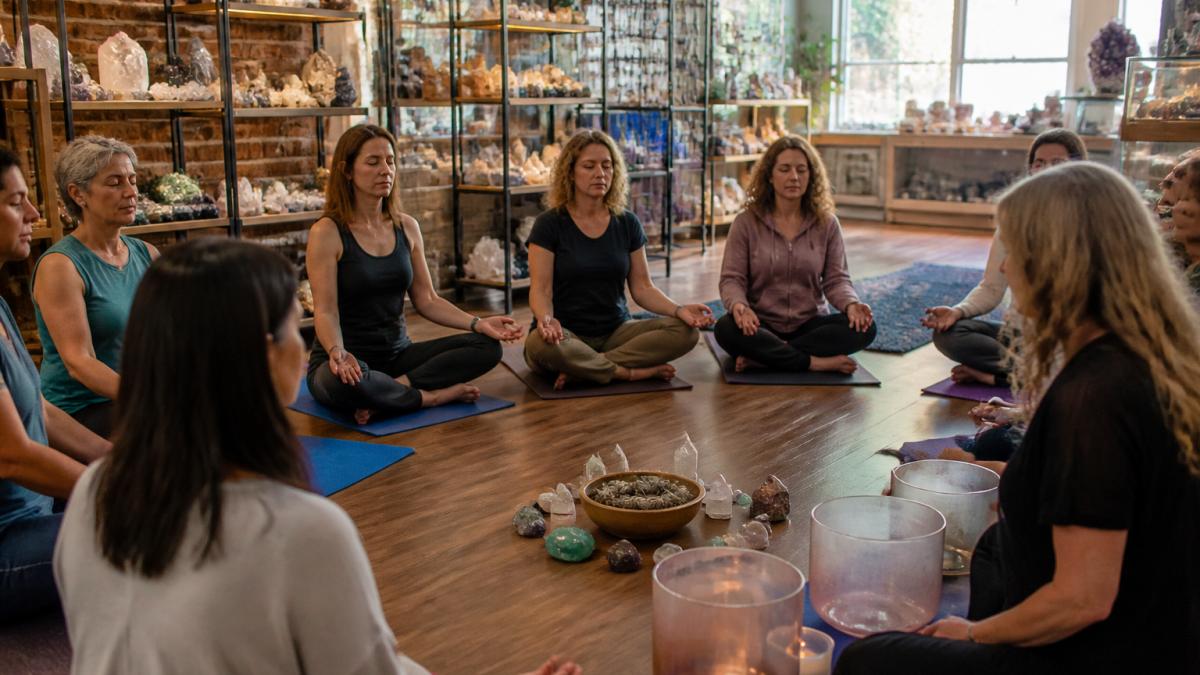
Most workshops blend several modalities rather than teaching just one. A typical session might combine guided meditation, breathwork, and sound healing, with an energy healer explaining the philosophy behind each practice as it unfolds.
Common energy healing practices include:
- Reiki, a Japanese hands-on technique where a practitioner channels energy through light touch or hovering hands
- Chakra balancing, which works with the body's energy centers to encourage alignment
- Sound healing, using singing bowls, tuning forks, or gongs to create calming vibrations
- Guided meditation and breathwork, which settle the nervous system and build presence
- Grounding exercises, simple techniques for feeling centered and connected to your body
Many workshops also touch on supporting tools like crystals, smudging, and herbal remedies. For anyone curious about the philosophy behind these methods, a book like Subtle Energy Techniques offers a solid starting point.
Energy Healing Meditation: Guided Practice That Calms the Nervous System
Energy healing meditation is a guided practice that combines mindfulness with energy awareness, helping participants shift out of fight-or-flight mode and into a calmer state. A facilitator usually leads the group through breathwork first, then a visualization or body scan, often with gentle sound in the background.
The nervous-system piece matters. Many people arrive wound tight from work and daily demands, and the guided format gives them permission to simply stop and breathe. Participants frequently describe feeling lighter, more grounded, and more present afterward.
This is also where the practice becomes practical. You learn techniques you can repeat at home: a few minutes of conscious breathing, a short body scan, a moment of stillness before a stressful meeting. The workshop teaches the skill; the benefit comes from using it.
Reiki Workshops and Hands-On Energy Work
Reiki workshops range from introductory sessions where you simply receive a short treatment to longer trainings that teach the hand positions and symbols for self-practice. In a beginner-friendly workshop, you'll typically stay fully clothed and receive light touch or hands held just above the body.
What most guides miss is that Reiki is as much about the receiver's relaxation as the practitioner's technique. The quiet, focused attention of a trained practitioner creates a calming container, and many participants report warmth, tingling, or deep rest.
If you want a tangible reminder of the practice between sessions, small tools help. Our Amethyst pendant with the Choku Rei Reiki symbol is a favorite among regulars, and a Chakra Selenite Palm Stone is easy to hold during meditation at home.


What Happens During a Workshop, Step by Step
Here's the general shape of a two-hour introductory workshop. Formats vary, but this sequence is common.
Step 1: Arrival and settling in (15 minutes). You'll check in, find a spot on a mat or chair, and take a few minutes to unwind. Facilitators usually explain the plan and invite questions.
Step 2: Grounding and breathwork (15 minutes). The group begins with simple breathing exercises and a short guided meditation to settle the nervous system and set an intention.
Step 3: Main practice (45-60 minutes). This is the heart of the session, whether that's a Reiki demonstration, a sound bath, or a guided energy meditation.
Step 4: Sharing and integration (20 minutes). Participants often share what they noticed. This is optional, and no one is put on the spot.
Subtle Energy Techniques (O) →
Step 5: Closing and questions (10 minutes). The facilitator wraps up and answers questions about continuing the practice at home.
Energy Healing Events: How to Find and Evaluate Them
Energy healing events in the Denver area range from free community gatherings to ticketed workshops and psychic fairs. Evaluating them well comes down to a few practical questions that most listings never answer.
Start with the facilitator's background. Ask how long they have practiced, where they trained, and whether they hold any certifications. Reiki practitioners, for example, often complete three levels of training, with the third level qualifying them as a master. Sound healers may have studied with specific lineages or completed certification programs. A facilitator who welcomes questions about their training is usually a good sign; one who deflects or overstates credentials is not.
Next, clarify the format and length. A two-hour introductory workshop is very different from a full-day training. Ask about group size, small groups (under 15) allow more personal attention, while larger groups may feel less intimate. Confirm what's included: mats, blankets, eye pillows, water, and any materials. If you have mobility or sensory needs, ask about seating options, lighting, and noise levels before you register.
Cost transparency matters. Ask whether the fee covers all materials, whether there are any additional charges, and what the refund policy is. A reputable host will state these clearly upfront. At For Heaven's Sake, our psychic fairs and in-store reader services give newcomers a low-pressure way to meet practitioners and ask questions before committing to a longer workshop. We're happy to talk through options by phone or in person at our Lakewood location.
Finally, trust your gut. A good facilitator will welcome beginners and explain what to expect without pressure. If an event promises to cure a medical condition or pushes expensive add-ons, walk away. Legitimate facilitators describe relaxation and personal growth, not guaranteed cures.
Who Workshops Suit, Who Should Check With a Doctor, and What They Cost
Energy healing workshops suit most adults who want to relax, explore mindfulness, or try a new self-care practice. No experience is required, and you can participate as much or as little as feels right. If you're simply curious, a short introductory session is a low-commitment way to see if the format resonates with you.
However, energy healing is not a substitute for medical care. If you're pregnant, managing a serious health condition, recovering from surgery, or taking medication for anxiety or a mental health condition, talk to your provider before attending. Some practices involve light touch, prolonged sitting, or guided imagery that may not be suitable for everyone. A responsible facilitator will ask about your comfort level and offer alternatives, such as chair seating or hands-off participation.
It's also important to have realistic expectations. Research on energy healing is limited, and most studies are small or methodologically weak. What many participants report, feeling calmer, more grounded, and more present, is subjective but real. Think of these workshops as complementary practices that support relaxation and self-awareness, not as treatments for specific conditions.
Costs vary by format and length. Introductory community events are often free or low-cost, while longer trainings and private sessions cost more. When evaluating a workshop, ask what the fee includes, materials, recordings, follow-up support, and whether there's a refund policy if you need to cancel. Our in-store reader services and psychic fair rates are posted clearly so you know what to expect, and we're happy to talk through options by phone.
Conclusion
Finding a workshop that feels right takes a little homework, but the payoff is a calmer nervous system and a practice you can carry into daily life. For Heaven's Sake has supported Denver-area seekers since 2000, and we're proud to be a minority woman-owned independent shop with over 900 five-star reviews on Google. Visit us at our Lakewood location at 2680 Youngfield Street to browse crystals, sound tools, and books, or ask our team about upcoming events. Get started with For Heaven's Sake and find the practice that fits your life.
Frequently Asked Questions
Is energy healing real, and what do the benefits actually feel like?
Energy healing is not a substitute for medical care, and research on it is mixed. What many attendees report is practical: deep relaxation, a quieter mind, and a nervous-system reset after a guided session. A workshop combines meditation, breathwork, and sound healing, so you may leave feeling calmer and more grounded. Think of it as complementary self-care, not treatment. If you have a health condition, keep your doctor in the loop.
How much does an energy healing workshop cost?
Costs vary by format and facilitator. At For Heaven's Sake, individual sessions with practitioners like Carol White Bear are $30 for 15 minutes or $50 for 30 minutes at Psychic Fair rates, and $65 for 30 minutes or $120 for 1 hour at regular rates. House and business clearings by Carol White Bear are available by request for $300-$500. For other readers like Deanna Gloyd and Vanessa Lee, pricing is available upon inquiry. Call the Lakewood store at (303) 284-3470 for more information.
Do you need experience to attend an energy healing workshop?
No. Most workshops are built for beginners and welcome all skill levels. Facilitators explain each practice before it starts, and you can sit out any activity that does not feel right. Wear comfortable clothing, bring a water bottle and a yoga mat if you have one, and arrive a few minutes early. If you are unsure, call ahead and ask what the session involves.
How do you choose an energy healing workshop that feels right for you?
Start with the modality: sound baths, guided meditation, breathwork, and Reiki workshops each feel different. Ask about the facilitator's training and experience, group size, and what a typical session includes. Visit the space beforehand if you can. A welcoming shop like For Heaven's Sake, with over 900 five-star Google reviews, lets you ask questions in person before you commit.