

Table of Contents
- What Ethical Gemstone Sourcing Means
- Step 1: Ask Ethical Gemstone Supplier Questions
- Step 2: Verify Gemstone Traceability and Supply Chain
- Step 3: Review Gemstone Origin Documentation
- Step 4: How to Verify Gemstone Authenticity
- Red Flags and Supplier Responses
- Building a Relationship With Ethical Suppliers
- Frequently Asked Questions
Last Updated: October 19, 2026
What Ethical Gemstone Sourcing Means
Ethical gemstone sourcing means knowing where your stones come from and how they were extracted, fair labor, environmental responsibility, and honest supply chain documentation at every step.
When you buy a gemstone, you support a chain of people and practices. Ethical sourcing asks: Were miners paid fairly?
Not all stones are created equal. The difference between an ethically sourced stone and one with hidden origins comes down to transparency and verification.
Ethical sourcing covers several key areas:
- Labor practices: Fair wages, safe working conditions, no child labor
- Environmental impact: Mining methods that minimize habitat damage and water pollution
- Supply chain transparency: Clear documentation from mine to market
Understanding what ethical sourcing means is your first step. The real work comes next: learning how to verify it.
Step 1: Ask Ethical Gemstone Supplier Questions
The best way to identify an ethical supplier is to ask direct questions and evaluate the quality of the answers. A reputable supplier answers clearly, names specific mines or regions, and offers documentation.
Most buyers ask yes/no questions ("Is this ethical?"). Instead, ask open questions that require the supplier to demonstrate knowledge. Below are the questions that matter most, with what a satisfactory answer sounds like and what should make you pause.
Questions About Labor and Community Impact
Ask your supplier about the people involved in mining and processing:
- Where exactly were these gemstones mined? (A specific region, mine, or licensed area, not just a country)
- Can you provide documentation of the mining location?
- What labor standards do your suppliers follow, and who verifies them?
What a satisfactory answer sounds like: The supplier names a specific region or mine, explains whether the operation is large-scale or artisanal, describes the labor standards they require, and can point to a supporting document, a supplier code of conduct, audit summary, or certification.
What an evasive answer sounds like: "All our stones are ethically sourced" with no specifics; a country name only ("from Brazil"); a claim that "everyone in the industry knows" the source; or a pivot to the stone's beauty instead of its origin.
Questions About Environmental Practices
Environmental responsibility matters as much as labor practices:
- What mining methods are used to extract these stones?
- How is water quality protected during mining?
- Are mining sites reclaimed after extraction, and who pays for reclamation?
- What waste management practices are in place?
What a satisfactory answer sounds like: The supplier can distinguish alluvial from hard-rock mining, knows whether the operation uses mercury or cyanide, and can describe reclamation or water-management practices.
What an evasive answer sounds like: "Mining is regulated" without naming the regulator or permit; a claim that "small-scale mining doesn't hurt the environment"; or no awareness of how the stone was extracted.
Questions About Traceability and Records
These questions test whether the supplier can actually connect the stone to its stated origin:
- Can you show me the chain of custody for this specific stone?
- Which documents do you hold for this parcel, mine permit, export license, import record, lab report?
- If documentation is incomplete, what do you know about the stone's history, and how do you know it?
- Who cut and polished this stone, and where?
A supplier who can answer these questions has a verifiable supply chain. One who cannot should be treated as a mixed-origin reseller until proven otherwise.
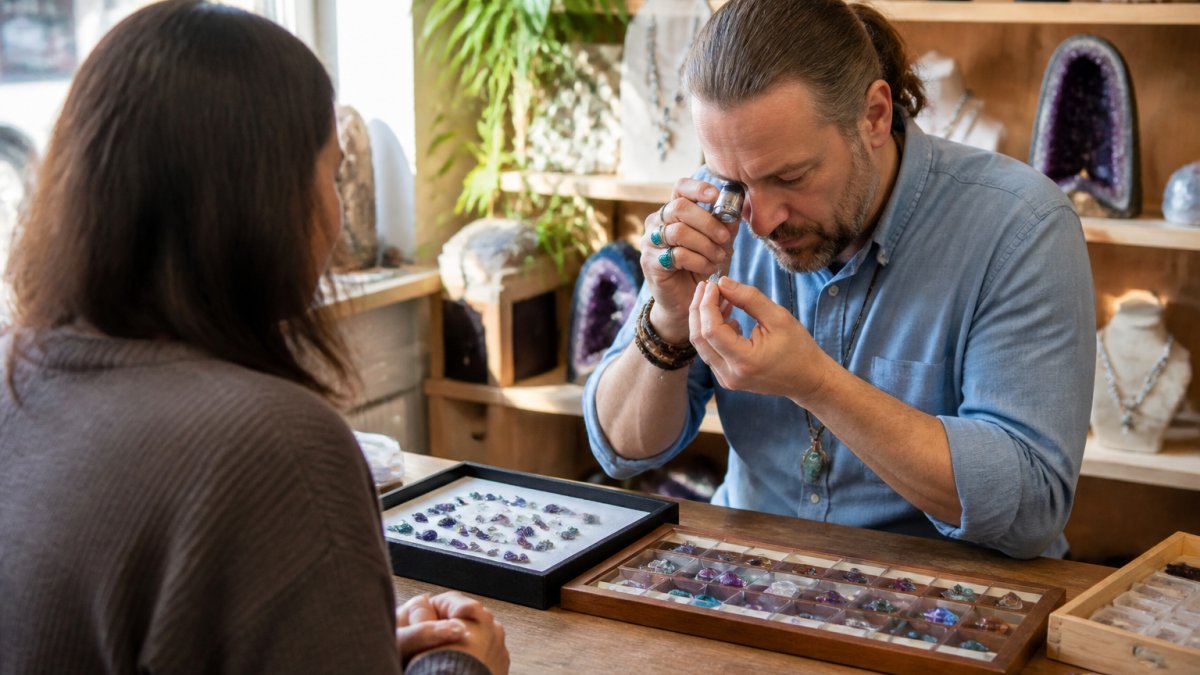
Once you have answers, move to verification: request the documents that back them up and check whether the records actually connect the stone to its stated origin.
Step 2: Verify Gemstone Traceability and Supply Chain
Asking questions is step one. Verifying the answers is step two.
Traceability means following a gemstone from the mine through every handler to your hand. Each step should have documentation. A clear chain of custody protects both you and the supplier.
Request these documents from your supplier:
- Mine certificates or mining permits
- Export and import documentation
- Laboratory reports confirming the stone's origin
- Chain of custody records showing each transfer
Not every supplier will have every document, but they should have some documentation for every stone. If a supplier says "we don't track that" or "the documentation is lost," that's a warning sign.
Step 3: Review Gemstone Origin Documentation
Documentation is your proof, but only if you understand what each document establishes. A common mistake is treating any paperwork as confirmation of ethical origin. Different documents prove different things, and some prove very little about the stone in your hand.
What Documentation to Request
Ask for these specific documents, and ask which ones apply to the specific stone you are considering:
- Laboratory reports: Independent gemological analysis confirming the stone's identity, weight, measurements, and any treatments. These prove what the stone is, not where it came from.
- Origin certificates or origin opinions: Documentation of where the stone was mined. Be aware that origin determination is an opinion, not a certainty, for many colored stones.
- Export permits: Official government records showing legal export from the source country. These prove the stone left legally, not that labor or environmental standards were met.
- Import records: Documentation of entry into the country where the stone was sold. These help connect the export to the sale.
Each document tells part of the story. Together, they create a picture of the stone's journey, but only if the records link to each other and to the stone.
How to Verify Chain of Custody
A credible chain of custody connects the stone to its stated origin through records that reference each other. Ask for the records in sequence and look for these connections:
- The mine or licensed area is named on a permit or license, and the permit is current for the date of extraction.
- The export record references the same parcel, weight, stone type, and date, as the mine record.
- The import record matches the export record in weight and description.
- The cutting and polishing records show the parcel moving from rough to finished stone, with weights that reconcile (allowing for normal loss during cutting).
- The final invoice or memo references the same parcel or stone.
If any link is missing, the chain is broken at that point. A broken chain does not automatically mean the stone is unethical, but it does mean the origin claim is unverified, and you should treat it as such.
Understanding Certification and Audit Limitations
Certifications sound reassuring, but they have real limits. An audit captures a moment in time; it does not guarantee every stone meets standards, only that the supplier's practices met standards when audited. Research any certification your supplier mentions and ask:
- Who conducted the audit, and are they independent of the supplier?
- When was it performed, and how often is it repeated?
- What specific practices were verified, labor, environment, or both?
- Does the certification cover the specific mine or only the trading company?
Certifications can support your decision, but they should not replace your own due diligence. Use them as one piece of evidence, not the only piece.
When Documentation Is Incomplete
Many suppliers work with gemstones that have been in the market for years, so complete documentation may not exist.
A reputable supplier provides what they have, never claims documents they don't possess, and explains gaps honestly. The key distinction is between "I don't have the mine record, but here is what I can verify" and "the documentation is lost" with no further detail.
Step 4: How to Verify Gemstone Authenticity
An ethically sourced stone should still be authentic. Request a laboratory report from an independent gemologist confirming:
- Stone type and species
- Weight and measurements
- Color and clarity
- Any treatments or enhancements applied
Treatments are common, heat treatment, irradiation, and other processes improve appearance. They aren't necessarily unethical, but they must be disclosed. Ask your supplier: "Has this stone been treated? If so, how?" A transparent answer builds confidence; an evasive one suggests the supplier may be hiding something. For colored gemstones, treatments are standard practice, the key is disclosure.
Red Flags and Supplier Responses
Watch for these supplier warning signs:
- Vague answers: If a supplier can't or won't explain their sourcing practices, move on
- No documentation: A refusal to provide any paperwork is a major red flag
- Pressure to buy quickly: Ethical suppliers aren't rushed; they're patient and transparent
- Unusually low prices: If a stone costs significantly less than comparable stones, ask why
When you encounter red flags, ask follow-up questions. Give the supplier a chance to explain. But if the answers don't satisfy you, trust your instinct.
A good supplier understands your questions come from a place of care. They welcome the conversation.
Building a Relationship With Ethical Suppliers
Finding an ethical supplier is one thing; building a lasting relationship is another. Once you've verified a supplier's practices, maintain that relationship, repeat business strengthens their ability to keep ethical practices. Share your values and let them know ethical sourcing matters to you; when suppliers know their customers care, they're more motivated to maintain high standards.
Ask about their long-term sourcing goals: Are they improving transparency? Investing in miner training or environmental restoration? These efforts show commitment beyond meeting current standards.
Frequently Asked Questions
What questions should you ask a gemstone supplier about sourcing?
Ask where gemstones originate, how they were mined, who handled them in the supply chain, what labor standards apply, and whether environmental impact assessments were conducted. Request documentation of these practices and inquire about third-party audits or certifications. Ask specifically about artisanal or small-scale mining involvement and whether the supplier can trace each stone back to its source. A transparent supplier will provide detailed, verifiable answers.
What does gemstone traceability mean?
Gemstone traceability is the ability to follow a stone from its point of extraction through every step of the supply chain to the final buyer. This includes documentation of mining location, extraction method, handling by intermediaries, processing, and sale. Strong traceability means a supplier can answer: where was it mined, by whom, when, and through which hands did it pass. Traceability enables verification that ethical sourcing claims are genuine.
How can you verify a gemstone's origin?
Request origin documentation from your supplier, such as certificates from gemological laboratories or mining records. Ask the supplier to provide the specific mine or region where the stone was extracted. For colored gemstones, geographic origin affects rarity and value, so reputable suppliers document this. Cross-reference supplier claims with independent gemological reports. Be cautious of vague origin statements like 'African' or 'Asian', ethical suppliers provide precise locations and supporting evidence.
How can you tell if a gemstone is authentic?
Request gemological certification from independent labs that assess authenticity, identify treatments, and confirm whether a stone is natural or synthetic. Ask your supplier whether the gemstone has been treated (heat-treated, irradiated, or chemically enhanced) and request disclosure in writing. Authentic stones should come with documentation of their properties. Suppliers who refuse to provide this information or cannot answer treatment questions are a red flag for authenticity concerns.
Finding ethically sourced gemstone suppliers requires asking the right questions, verifying documentation, and staying alert to red flags. The process takes time, but it ensures the stones you bring into your life align with your values. At For Heaven's Sake, we're committed to helping conscious consumers make informed choices about the gemstones they purchase. Visit us to explore our collection of responsibly sourced gemstones and learn more about our sourcing practices. Go Shopping.