

Table of Contents
- Why Local Metaphysical Shops Beat Online Retailers
- What to Look for in a Shop of Crystals
- The Role of Metaphysical Community Events in Spiritual Growth
- Essential Spiritual Tools and How to Choose Them
- Ethical Sourcing and Sustainability in Metaphysical Retail
- Personalized Ritual Kits and Curated Selections
- Building a Spiritual Community Through Local Business
- Frequently Asked Questions
Last Updated: September 18, 2026
Why Local Metaphysical Shops Beat Online Retailers
Walk into a shop and you can hold a stone in your palm, feel its weight, and notice how it responds to your energy. That sensory exchange is the core reason why buy from local metaphysical shops: the tools you choose in person are ones your body and intuition have already vetted. For Heaven's Sake has served seekers in the Denver area since 2000, and in that time we've watched people discover that a crystal picked from a screen often arrives feeling flat, while one chosen from a shelf feels immediately right.
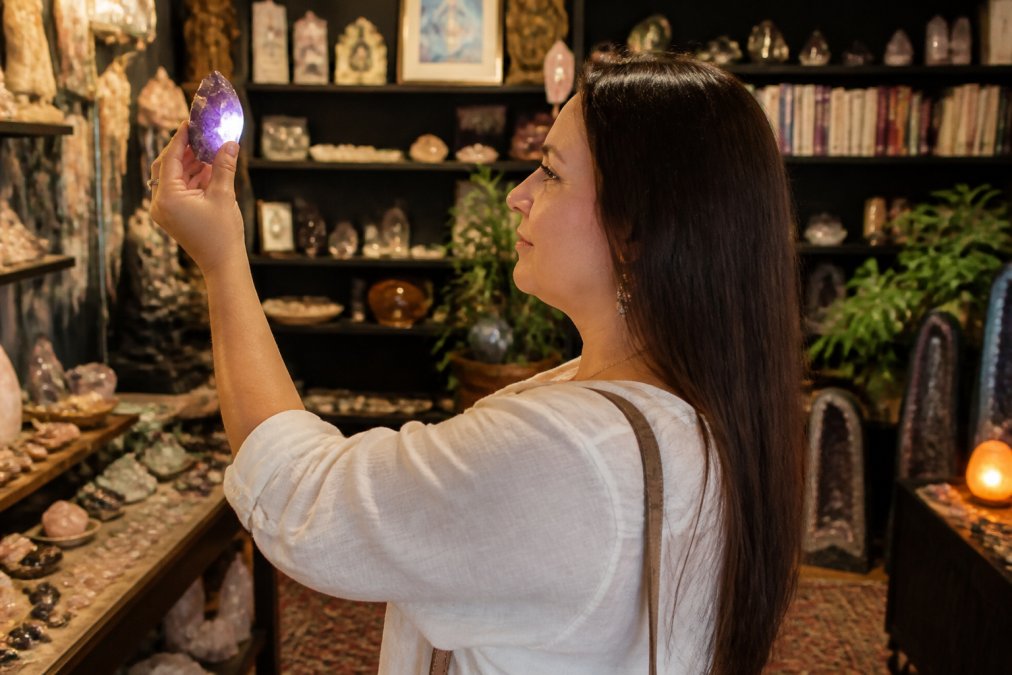
That's not mysticism for its own sake. It's the simple fact that spiritual tools work best when you've had a genuine encounter with them.
The Energetic Difference Between Local and Online
Buying metaphysical supplies in person is an energetic exchange, not just a transaction. When you visit a shop, you touch, hold, and sense a stone before it becomes yours. Online, you're choosing from a photograph and a description someone else wrote.
The practical differences add up:
- You can feel weight, temperature, and texture in your hand
- You can ask questions and get answers in real time
- You can compare several pieces side by side
- You leave with the item that actually called to you
What most guides miss is that a crystal's appeal is personal. The stone that looks perfect on a product page may not resonate once it's in your space. Buying in person removes that guesswork.
What to Look for in a Shop of Crystals
A good shop of crystals does three things well: it labels its stones accurately, it lets you handle them, and its staff can explain metaphysical properties without pressure. Everything else is decoration.
How to Vet a Shop's Authenticity
Authenticity comes down to transparency. Ask where stones come from, whether they're treated or dyed, and how the shop sources its ceremonial supplies. A trustworthy shop answers directly. A shop that deflects or guesses is telling you something.
Use these signals to read a shop quickly:
- Clear labeling. Every stone should be identified by name and, where relevant, origin. If a shop can't tell you what a piece is, that's a red flag.
- Hands-on access. You should be able to pick up and hold pieces before buying. A shop that keeps everything behind glass with no sample tray is harder to trust.
- Knowledgeable staff. Ask a question about a specific stone and see whether the answer is specific or vague. "It's good for energy" is a non-answer. "This is amethyst from Brazil, and it's often used for calm and sleep" is a real one.
- A curated selection over a huge one. A focused inventory usually means someone chose each piece with care. A wall of identical tumblers at rock-bottom prices often means mass sourcing with no traceability.
- A welcoming atmosphere. You should feel comfortable browsing, even as a complete beginner. Watch how staff treat the person who asks a "silly" question.
The Gatekeeping Test
Spiritual spaces have a reputation for gatekeeping, and some of it is earned. A welcoming shop passes a simple test: it answers beginner questions without condescension, it doesn't upsell you into tools you don't need, and it lets you leave without buying anything.
Red flags worth noting:
- Staff who mock your questions or act like you should already know
- Pressure to buy a "required" kit before you can start
- Claims that a stone will cure a medical condition
- Refusal to say whether a piece is dyed, heat-treated, or synthetic
The Role of Metaphysical Community Events in Spiritual Growth
Metaphysical community events turn solitary practice into shared experience. Workshops, psychic fairs, and group readings give you access to practitioners and fellow seekers you'd never encounter shopping alone online.
What Actually Happens at These Events
Different formats serve different needs. Knowing the difference saves you from signing up for the wrong thing:
- Psychic fairs. Vendors, readers, and healers set up booths. You wander, sample short readings, and talk to practitioners before committing to a longer session. Low pressure, good for first-timers.
- Workshops. A practitioner teaches a specific skill, such as crystal grids, tarot spreads, or grounding techniques. Usually structured with a set start time and a small group.
- Group readings. A medium or reader works with a room rather than one person. You observe as much as you participate.
- Circles and meetups. Ongoing groups that meet regularly for meditation, discussion, or practice. These build the deepest relationships over time.
The Energetic Difference of a Shared Room
There's a reason group practice feels different from practicing alone. When several people focus on the same intention in the same space, the room itself carries a charge that's hard to replicate through a screen. Practitioners commonly describe this as the difference between reading about a meditation and sitting in one with twenty other people.
How to Show Up as a Beginner
Etiquette in these spaces is simpler than it looks:
- Ask before touching. At fairs, vendor tables are usually hands-on, but a reader's altar or a group's shared tools are not.
- Keep readings time-boxed. If a fair offers short sessions, respect the clock so the next person gets their turn.
- Skepticism is welcome. Curiosity and doubt are both fine. What isn't fine is disrupting someone else's session.
- Start with a fair, not a workshop. A fair lets you observe at your own pace. A workshop asks for a commitment before you know if the topic fits.
If you're new, start with a low-pressure event where you can wander, observe, and talk to readers before committing to anything. Curiosity is welcome; skepticism is welcome too.
Essential Spiritual Tools and How to Choose Them
Choosing spiritual tools is less about buying everything and more about building a small set you actually use. Start with the basics and add as your practice deepens.
A simple starter set:
- A cleansing tool. White sage or desert sage wands are widely used to clear negative energy and create sacred space, while desert sage is valued for grounding and calm.
- A charging plate. A selenite plate clears unwanted energy and can charge your other crystals.
- A grounding stick. Palo Santo is used for spiritual cleansing, meditation, and connecting with higher consciousness.
- A reference book. A good guide helps you understand each stone's properties and which work well together.
Ethical Sourcing and Sustainability in Metaphysical Retail
Ethical sourcing is where local shops can genuinely outshine online sellers. When you buy in person, you can ask directly where a stone was mined, how it was processed, and whether the people who handled it were treated fairly. Those questions rarely get answered on a product page.

Look for shops that:
- Can name the origin of their stones
- Avoid dyed or misrepresented pieces
- Source ceremonial supplies responsibly
- Are transparent about what they don't know
Personalized Ritual Kits and Curated Selections
Personalized ritual kits beat generic bundles because they're built around your actual practice. A curated selection starts with what you're trying to do, whether that's grounding, protection, or simply building a daily mindfulness habit, and pairs tools that support it.
Building a Spiritual Community Through Local Business
Every dollar spent at a local metaphysical shop keeps a gathering place open. That's the ripple effect of supporting local spiritual businesses: the shop hosts the fairs, the workshops, and the readings that give a community somewhere to meet.
American Psychological Association on mindfulness research
Frequently Asked Questions
What are the benefits of shopping at a local metaphysical store?
Local metaphysical stores offer hands-on access to crystals and spiritual tools, letting you feel a stone's weight and energy before buying. You get expert guidance from practitioners who can answer questions about tarot, energy healing, or altar supplies. Local shops also foster community through workshops and psychic fairs, and they often source ethically. For Heaven's Sake, a minority woman-owned business in Lakewood, provides a welcoming space for beginners and experienced seekers alike.
How do local metaphysical shops support spiritual community growth?
Local shops host metaphysical community events like psychic fairs, group meditations, and workshops on ritual or tarot. These gatherings connect like-minded people, offer intuitive guidance, and create a sacred space for shared practice. By attending, you build relationships with practitioners and fellow seekers, which deepens your spiritual growth. Supporting a local business also keeps resources within the community, strengthening the overall spiritual ecosystem.
Why is it better to buy crystals in person rather than online?
Buying crystals in person lets you assess a stone's vibrational feel, color, and clarity directly. Online photos can misrepresent size or quality, and you miss the intuitive pull that happens when you hold a crystal. In a shop of crystals, you can ask staff about a stone's metaphysical properties and how it was sourced. This hands-on experience ensures you choose tools that genuinely resonate with your energy and needs.
How do local metaphysical shops verify the quality of their products?
Reputable shops vet suppliers, request sourcing details, and often work directly with artisans or small mines. They may test stones for authenticity and label materials accurately. For example, a selenite charging plate should be genuine selenite, not glass. Shop owners with years in the field, like those at established centers, rely on trusted relationships and personal expertise to curate selections. Ask about a shop's sourcing practices to confirm their commitment to quality.
Choosing spiritual tools can feel overwhelming when every online listing looks the same and none of them let you feel the stone in your hand. For Heaven's Sake offers a curated selection of crystals, ceremonial supplies, books, and jewelry, backed by professional readings and community events at our Lakewood location. Visit us at 2680 Youngfield Street to browse in person, ask questions, and find the tools that actually resonate with you.