

Table of Contents
- What Makes the Rider Waite Smith Tarot Deck the Industry Standard
- History and Origins of the Rider Waite Smith Deck
- Understanding the 78-Card Structure and Symbolism
- Deck Variations and Editions Available
- How to Read Tarot Cards for Beginners
- Tarot Card Spreads for Daily Guidance
- How to Cleanse Your New Tarot Deck
- Authenticity Verification and Physical Quality
- Frequently Asked Questions
Last Updated: September 30, 2026
What Makes the Rider Waite Smith Tarot Deck the Industry Standard
The Rider Waite Smith tarot deck stands as the most recognizable and widely used tarot system in the world. Its standardized structure, accessible imagery, and comprehensive symbolism have made it the foundation for modern tarot practice. Whether you're picking up a deck for the first time or deepening an existing spiritual practice, understanding why this particular deck dominates the field matters.

At For Heaven's Sake, we offer a curated selection of tarot decks, and the Rider Waite Smith consistently emerges as a popular entry point for beginners and a reference standard for experienced readers alike. The deck's influence extends far beyond casual interest, it's a template against which many other decks are measured.
What sets this deck apart isn't just history. It's the clarity of its symbolic language. Each card communicates through visual storytelling that invites interpretation without overwhelming the reader. The numbered sequence, consistent suit structure, and archetypal imagery create a learning framework that actually works.
History and Origins of the Rider Waite Smith Deck
The deck emerged in 1909 when Arthur Edward Waite, a respected occultist and scholar, partnered with artist Pamela Colman Smith to create an illustrated tarot system. Before this collaboration, most tarot decks reserved detailed imagery only for the Major Arcana. The Minor Arcana cards were abstract patterns, pips without narrative. Smith's innovation changed everything: she illustrated all 78 cards with complete scenes, transforming the Minor Arcana from decorative cards into storytelling tools.
The "Rider" name comes from William Rider & Son, the London publisher who first released the deck. The "Smith" honors Pamela Colman Smith's artistic vision. The "Waite" acknowledges Arthur Edward Waite's esoteric framework and the accompanying guidebook, originally titled "The Pictorial Key to the Tarot."
This collaboration created something unprecedented: a deck that functioned as both an artistic achievement and an educational system. Smith's illustrations drew from Renaissance art, medieval symbolism, and occult tradition, layering meaning into every card. Her work established visual conventions that remain standard across tarot decks today.
The deck gained momentum slowly at first, then became the dominant system by the mid-20th century. Translations, reprints, and modern recolorings have since introduced variations, but the original structure and Smith's core imagery remain the foundation.
The Pictorial Key to the Tarot by Arthur Edward Waite provides the original interpretation framework, offering deep context for anyone serious about understanding the deck's symbolic architecture.
Understanding the 78-Card Structure and Symbolism
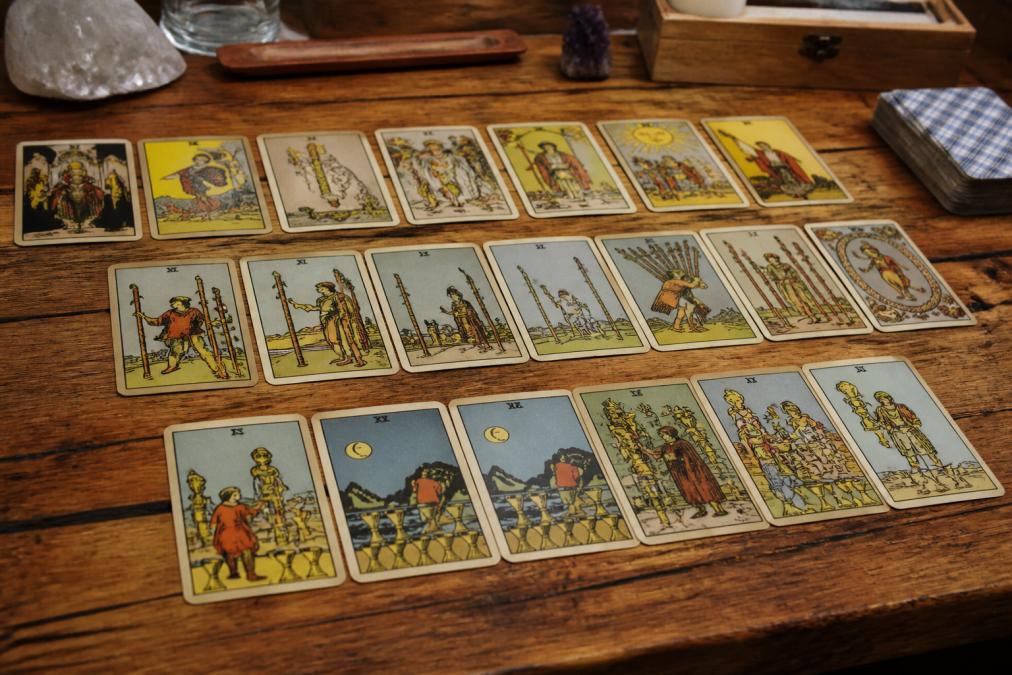
The Rider Waite Smith deck contains 78 cards divided into two sections: the Major Arcana and the Minor Arcana. This structure mirrors a complete journey, from foundational life lessons through specific situations and outcomes.
Major Arcana vs. Minor Arcana
The Major Arcana consists of 22 cards numbered 0 through 21. These cards represent major life themes, spiritual lessons, and significant archetypal forces. The Fool's Journey, a narrative framework where The Fool (card 0) moves through increasingly complex life experiences, provides the conceptual backbone for the entire deck.
The Minor Arcana contains 56 cards organized into four suits. These cards address everyday situations, practical challenges, and immediate circumstances. Think of Major Arcana cards as addressing the "why" and "what's transforming" while Minor Arcana cards answer "what's happening now" and "what action matters."
The Four Suits and Court Cards
Each Minor Arcana suit contains 14 cards: 10 numbered cards (pips) plus 4 court cards.
Wands represent fire energy, creativity, passion, ambition, and action. Wands address what drives you, what excites you, and where your willpower focuses.
Cups embody water energy, emotions, relationships, intuition, and spiritual connection. Cups explore feelings, bonds, and the internal landscape.
Swords channel air energy, intellect, conflict, clarity, and communication. Swords cut through confusion and address mental processes and challenging truths.
Pentacles ground earth energy, material resources, work, health, and practical matters. Pentacles speak to what's tangible, sustainable, and rooted in physical reality.
Court cards, Page, Knight, Queen, King, represent people, personality aspects, or developing situations within each suit. The Page typically symbolizes youth or learning; the Knight represents action and momentum; the Queen embodies mastery and receptivity; the King demonstrates authority and full expression.
| Suit | Element | Core Themes | Court Card Progression |
|---|---|---|---|
| Wands | Fire | Creativity, action, passion | Page → Knight → Queen → King |
| Cups | Water | Emotion, relationships, intuition | Page → Knight → Queen → King |
| Swords | Air | Intellect, conflict, clarity | Page → Knight → Queen → King |
| Pentacles | Earth | Resources, work, health | Page → Knight → Queen → King |
Deck Variations and Editions Available
Multiple versions of the Rider Waite Smith deck exist, each offering different visual treatments while maintaining the original structure and symbolism.
Radiant Rider-Waite Tarot Deck →
The Radiant Rider-Waite Tarot Deck ($21.95) presents a modernized color palette. The cards maintain Smith's original compositions while introducing brighter, more saturated hues. This version appeals to readers who prefer contemporary aesthetics without losing the deck's foundational imagery. The card size measures 4.75 x 2.75 inches, making it portable and comfortable for extended reading sessions.
The Smith-Waite Centennial 78 Card Deck with Booklet ($23.95) commemorates the deck's centennial with an instructional booklet and 84 total cards (including bonus art samples). This edition serves readers who want guidance alongside the cards themselves, particularly those building their practice from scratch.

The Universal Waite Tarot Deck ($21.95) features recoloring by Mary Hanson-Roberts, who softened Smith's original palette while preserving all symbolic elements. This version appeals to readers who find the Radiant edition too bold but want more visual clarity than the original. The standard size (2.75 x 4.75 inches) fits standard card shuffling techniques.
The Rider Tarot Deck Premier Edition ($26.95) is the full-size option at 4.625 x 7.25 inches. The larger format makes symbolic details visible without magnification, ideal for readers with vision concerns or those who appreciate examining card artwork in depth.
The Radiant Rider-Waite in a Tin ($19.95) packages a pocket-sized deck (3.5 x 2 inches) in a protective keepsake tin. This version prioritizes portability and protection, perfect for readers who travel or want a desk-friendly option.
The Universal Waite Premier Deck ($26.95) combines the recolored Universal Waite imagery with premium materials and includes a 17 x 20 inch spread sheet plus a 36-page instruction booklet. This is the comprehensive option for serious beginners or collectors.
The Universal Waite Pocket Deck with Stand-Up Box ($19.95) offers the recolored Universal Waite in pocket size (3.5 x 2.25 inches) with protective stand-up packaging. This balances affordability with quality for readers who want a reliable, portable deck.
For absolute beginners, the Your First Tarot ($22.95) adapts the classic Rider-Waite-Smith system with keywords printed directly on each card.
How to Read Tarot Cards for Beginners
Start with a clear question or intention before you shuffle. Your question shapes what the cards reveal. Vague questions produce vague answers; specific intentions focus the deck's response.
Tarot Card Spreads for Daily Guidance
A one-card draw takes 30 seconds and answers "What do I need to know today?" Draw a single card each morning for a daily focal point. This practice builds familiarity with the deck while offering quick perspective.
How to Cleanse Your New Tarot Deck
Cleansing removes previous energetic imprints and prepares the deck for your personal practice. Several methods work equally well, choose based on your comfort and resources.
Authenticity Verification and Physical Quality
Counterfeit tarot decks exist, particularly for the Rider Waite Smith due to its popularity. Knowing what to verify protects your investment and ensures you're receiving the deck you paid for.
Frequently Asked Questions
What is the Rider Waite Smith tarot deck and why is it recommended for beginners?
The Rider Waite Smith tarot deck is a 78-card divination deck created by Arthur Edward Waite and illustrated by Pamela Colman Smith. It's recommended for beginners because all 78 cards feature detailed pictorial imagery, making it easier to intuit card meanings without memorization. The standardized symbolism and archetypal imagery have made it the foundation for modern tarot practice. Most beginner-friendly decks, including the Radiant Rider-Waite and Universal Waite variations, are based on this original design.
How do I choose an authentic Rider Waite Smith deck?
Authentic Rider Waite Smith decks are published by U.S. Games Systems, Inc., and will display this publisher name on the box. Check the ISBN (International Standard Book Number) on the packaging. Verify the artist credit lists Pamela Colman Smith as the illustrator. Look for quality card stock, clear printing, and a sturdy box. Authorized editions include the Radiant Rider-Waite, Universal Waite Premier, and Smith-Waite Centennial versions. Avoid decks with blurry imagery or poorly reproduced artwork, which indicate counterfeit copies.
What are the main differences between Rider Waite Smith deck variations?
The primary variations differ in card size, color treatment, and included materials. The Radiant Rider-Waite features vibrant, digitally remastered colors and comes in standard or pocket sizes. The Universal Waite uses Mary Hanson-Roberts' recoloring and offers both pocket and premier editions with instruction booklets. The Smith-Waite Centennial includes 84 cards with bonus art samples. The Rider Premier Edition is full-size (4.625 x 7.25 inches). Choose based on your hand size, preference for color intensity, and whether you want included instructional materials.
Can I use tarot cards alongside other spiritual practices or professional guidance?
Tarot works well as a complement to meditation, journaling, and other spiritual practices for self-reflection and personal insight. However, tarot is not a substitute for professional advice. If you're seeking guidance on health, legal, or mental health matters, consult qualified professionals first. Tarot is best used as a tool for introspection and spiritual exploration, not as a replacement for medical, legal, or therapeutic care. Many people integrate tarot into a broader wellness routine that includes professional support.