

Last Updated: November 3, 2026
Quick Summary
Reversed tarot cards are cards that land upside down in a spread, and their meanings are read in an inverted way. Reversals usually appear through shuffling and draw method rather than deliberate choice, and readers can either ignore them or treat them as a second layer of meaning.
- Read the upright meaning first, then the reversed meaning, then the reversal type.
- Reversed meanings usually lean toward blocked, internalized, excessive, or delayed energy.
- Check the position label first, since a reversal modifies the card's job in the spread.
- Look at neighboring cards and count reversals in one area to see if a theme is stalled.
- Decide your reversal approach before reading so your interpretations stay consistent.
Table of Contents
- What a Reversed Tarot Card Is and How Cards Become Reversed
- Difference Between Upright and Reversed Tarot Cards
- Core Interpretations: Blocked, Internalized, Excessive, and Delayed Energy
- Reversed Tarot Card Meanings List for All 78 Cards
-
How to Read Reversed Tarot Cards in Spread Position and Context
- Step 1: Note the Position First
- Step 2: Check the Surrounding Cards
- Step 3: Match the Reversal Type to the Question
- Worked Example 1: Reversed Two of Swords in the Present
- Worked Example 2: Reversed Three of Cups in the Future
- Worked Example 3: Reversed Ace of Pentacles in the Advice Position
- Worked Example 4: Reversed Five of Wands in a Relationship Position
- A Decision Framework for Choosing Among Reversal Interpretations
- Start Your Own Reversed Card Practice With a Beginner Deck
- Frequently Asked Questions
What a Reversed Tarot Card Is and How Cards Become Reversed
A reversed tarot card lands upside down in a spread, so its image and meaning are read inverted. Any card that comes up inverted is considered reversed, part of the reading, not a mistake.
Reversals usually appear through shuffling and draw method, not deliberate choice. Some readers ignore them; others treat them as a second layer of meaning. Decide your approach before you begin so your interpretation stays consistent.
Difference Between Upright and Reversed Tarot Cards
An upright card is read in its standard orientation. A reversed card shifts that meaning toward blocked, delayed, excessive, or internalized expression of the same energy. The card does not become "bad"; it shows how the energy is moving or stalling.
Reversed meanings also depend on surrounding cards and the question asked, so treat the interpretations below as starting points rather than fixed rules.
Core Interpretations: Blocked, Internalized, Excessive, and Delayed Energy
Most reversal interpretations fall into four broad categories. Learning these first makes it easier to build meanings for individual cards later.
Blocked or Weakened Energy
Blocked energy is the most common reading for a reversed card: the card's quality is present but cannot flow outward. A reversed Ace of Cups, for example, may point to emotional openness that is held back rather than absent.
Weakened energy is related: the card's influence is real but reduced, so the querent may feel the theme without being able to act on it fully.
Internalized or Unconscious Energy
Internalized energy means the card's theme works beneath the surface, as private thought, habit, or unspoken pattern rather than outward action. Many readers use this when a reversed card points to inner work, reflection, or a belief the querent has not yet named.
Reversed Tarot Card Meanings List for All 78 Cards
Here is a consistent, scannable reversal reference for every card. Each entry follows the same pattern: upright theme, reversed theme, and the reversal type it most often leans toward (blocked, internalized, excessive, or delayed). Treat the type as a default, not a verdict, context in the spread can shift it.
How to Use This Reference
Read the upright meaning first, then the reversed meaning, then the reversal type. If the type does not fit the question, check the other three categories in the decision framework below. Keep your own notes in the same three-column format so your deck knowledge stays consistent across all 78 cards.
Major Arcana Reversals
- The Fool, Upright: new beginnings, leap of faith. Reversed: hesitation, recklessness, or a start delayed by fear. Type: blocked or delayed.
- The Magician, Upright: manifestation, skill. Reversed: untapped ability, scattered focus, or manipulation. Type: blocked or excessive.
- The High Priestess, Upright: intuition, hidden knowledge. Reversed: ignored intuition, secrets, or disconnection from inner voice. Type: internalized or blocked.
Minor Arcana Reversals, Wands
- Ace of Wands, Upright: spark, inspiration. Reversed: false start, low motivation, or delayed launch. Type: blocked or delayed.
- Two of Wands, Upright: planning, choice. Reversed: indecision, fear of leaving comfort. Type: internalized or blocked.
- Three of Wands, Upright: expansion, foresight. Reversed: delays, narrow vision, or plans stalled. Type: delayed or blocked.
Minor Arcana Reversals, Cups
- Ace of Cups, Upright: emotional opening, love. Reversed: held-back feeling, emotional block. Type: blocked or internalized.
- Two of Cups, Upright: partnership, mutual attraction. Reversed: imbalance, disconnection, or self-love needed. Type: blocked or internalized.
- Three of Cups, Upright: friendship, celebration. Reversed: isolation, gossip, or overindulgence. Type: blocked or excessive.
Minor Arcana Reversals, Swords
- Ace of Swords, Upright: clarity, breakthrough. Reversed: confusion, miscommunication, or harsh words. Type: blocked or excessive.
- Two of Swords, Upright: decision, stalemate. Reversed: indecision, or forced choice. Type: blocked or delayed.
- Three of Swords, Upright: heartbreak, grief. Reversed: healing, or suppressed pain. Type: delayed or internalized.
Minor Arcana Reversals, Pentacles
- Ace of Pentacles, Upright: opportunity, seed. Reversed: missed opportunity, or delayed start. Type: blocked or delayed.
- Two of Pentacles, Upright: balance, juggling. Reversed: overwhelm, or dropped priorities. Type: excessive or blocked.
- Three of Pentacles, Upright: collaboration, craft. Reversed: teamwork breakdown, or lack of skill. Type: blocked or internalized.
Watch out: treating the reversal type as fixed can flatten a reading, a reversed Ten of Swords in a "what to release" position may read as recovery rather than refusal to end, so always check the question before locking in the type.
How to Read Reversed Tarot Cards in Spread Position and Context
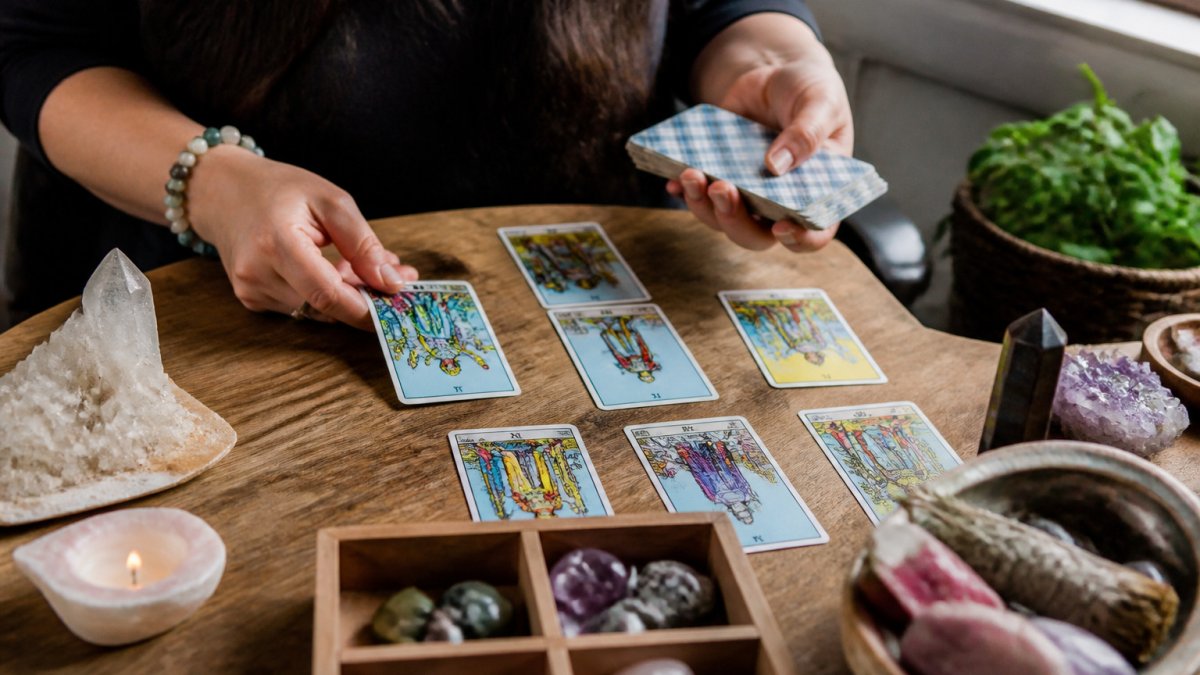
Position and context turn a reversal from a dictionary entry into a reading. The same reversed card can mean four different things depending on where it lands and what sits beside it. Below is a practical method, followed by worked examples.
Step 1: Note the Position First
Read the position label before you read the card. A past/present/future spread, a Celtic Cross, or a situation/action/outcome spread each assign a job to every card. The reversal modifies that job, it does not replace it.
- Past position: a reversal often points to something unfinished, suppressed, or released from the past rather than an event that never happened.
- Present position: a reversal usually describes the current texture of the energy, blocked, internalized, excessive, or in the process of shifting.
- Future or outcome position: a reversal often signals delay, a conditional outcome, or an outcome that depends on the querent's next move.
Step 2: Check the Surrounding Cards
Look at the cards immediately adjacent to the reversal and at the overall reversal count in the spread.
Complete Tarot Kit, The Box Se →
- One reversal among uprights: usually a single obstacle or a specific blind spot.
- A cluster of reversals in one area: the theme of that area is stalled or working below the surface as a whole.
- A reversal next to its upright counterpart (for example, reversed Ace of Cups beside upright Two of Cups): the upright card often shows where the blocked energy wants to go.
Step 3: Match the Reversal Type to the Question
Use the four categories, blocked, internalized, excessive, delayed, as filters. Ask which one actually answers the querent's question. If two fit, choose the one that produces a useful next step, not the one that sounds most dramatic.
Worked Example 1: Reversed Two of Swords in the Present
A querent asks, "Why do I feel stuck at work?" The spread is situation / obstacle / advice. The Two of Swords lands reversed in the obstacle position, flanked by the Eight of Pentacles upright and the Four of Cups upright.
- Position reading: the obstacle is an internal pattern, not an external event.
- Context reading: the Eight of Pentacles shows steady effort; the Four of Cups shows apathy. The reversed Two of Swords between them points to a decision the querent keeps avoiding because the work itself has become numbing.
- Type match: internalized fits better than blocked, because the indecision is carried privately rather than imposed from outside.
Worked Example 2: Reversed Three of Cups in the Future
A querent asks, "Will my friend group stay close after I move?" The Three of Cups lands reversed in the future position, next to the Six of Cups upright and the Hermit upright.
- Position reading: the future is conditional, not fixed.
- Context reading: the Six of Cups shows shared history; the Hermit shows chosen solitude. The reversed Three of Cups between them suggests the group connection will thin out, not break, contact becomes more private and less communal.
- Type match: delayed fits better than blocked, because the connection is not gone, just slower and less frequent.
Worked Example 3: Reversed Ace of Pentacles in the Advice Position
A querent asks, "Should I launch my side business now?" The Ace of Pentacles lands reversed in the advice position, beside the Knight of Pentacles upright and the Seven of Pentacles upright.
- Position reading: the advice is about how to act, not whether the idea is good.
- Context reading: the Knight of Pentacles and Seven of Pentacles both emphasize patience and steady work. The reversed Ace between them reads as "do not treat this as a launch, treat it as a seed."
- Type match: delayed fits better than blocked, because the opportunity is real but the timing is early.
Worked Example 4: Reversed Five of Wands in a Relationship Position
A querent asks, "What is really going on between us?" The Five of Wands lands reversed in the relationship position, next to the Two of Cups upright and the Moon upright.
- Position reading: the card describes the dynamic itself, not one person's behavior.
- Context reading: the Two of Cups shows real mutual feeling; the Moon shows confusion. The reversed Five of Wands between them points to conflict being avoided rather than resolved.
- Type match: internalized fits better than blocked, because the friction exists but is not being voiced.
Watch out: it is easy to over-read a single reversal by stacking every possible interpretation onto it. Pick one type, state it plainly, and let the surrounding cards do the rest.
A Decision Framework for Choosing Among Reversal Interpretations
Use these three questions to choose which reversal reading fits a card:
- Is the energy outward or inward? Outward energy that is held back suggests blocked meaning. Inward energy that is unspoken suggests internalized meaning.
- Is there too much of the theme? If the card's energy seems overwhelming or imbalanced, excessive meaning may fit better.
- Is the timing unclear? If the reading points to something that has not yet happened, delayed meaning is often the best match.
If more than one interpretation fits, choose the one that best answers the question. Some readers also write a short note explaining their choice, which helps them learn over time.
Start Your Own Reversed Card Practice With a Beginner Deck
The easiest way to practice reversals is with a deck designed for learners. The Your First Tarot deck is based on the classic Rider-Waite-Smith design and includes keywords on each card, which helps new readers connect images to meanings. The Beginner's Guide to Tarot Deck Set pairs 78 cards with a 192-page book and layout template, giving you reference material as you practice.


For a fuller starting point, the Complete Tarot Kit, The Box Set includes two decks, an introduction book, a spread sheet, and a quick reference chart in one case. If you want a book to read alongside your draws, the Pictorial Key to the Tarot is a classic reference with black-and-white illustrations.

Practice by drawing one card a day, noting whether it appears reversed, and writing your interpretation before checking the book. Over several weeks, your own notes will become your most useful reference.
Here is a quick reference to the beginner decks mentioned above, so you can compare what each one includes.
| Deck | What it includes | Best for |
|---|---|---|
| Your First Tarot | Rider-Waite-Smith design with keywords on each card | Connecting images to meanings |
| Beginner's Guide to Tarot Deck Set | 78 cards, 192-page book, layout template | Reference material while practicing |
| Complete Tarot Kit, The Box Set | Two decks, intro book, spread sheet, quick reference chart | A full starting point in one case |
| Pictorial Key to the Tarot | Classic book with black-and-white illustrations | Reading alongside your draws |
Frequently Asked Questions
What does a reversed tarot card symbolize?
A reversed tarot card usually signals that the energy of the card is blocked, weakened, internalized, excessive, or delayed. Readers often treat it as the card's meaning turned inward or pushed to a later time. The surrounding cards, the question asked, and the card's position in the spread all help decide which of these readings fits. Many readers also use reversals as a prompt to look more closely at a situation rather than as a fixed warning.
Are reversed tarot cards always negative?
No. A reversal does not automatically mean something bad. Some reversed cards point to release, letting go, or a challenge that can be worked through. The Tower reversed, for example, is often read as a sign that a disruption is being avoided or slowly unfolding rather than as a sudden catastrophe. Reading the card in context keeps the interpretation balanced and avoids fatalistic conclusions.
Do I have to read reversed tarot cards, or can I ignore them?
You can ignore reversals if you prefer. Many readers work only with upright cards and find that approach clear and consistent. Others include reversals because they add nuance, especially for questions about timing or inner patterns. If you choose to skip them, decide before you shuffle so your method stays the same from reading to reading. Your Beginner's Guide to Tarot Deck Set includes a book that covers reading with and without reversals.
How should a beginner start practicing with reversed tarot cards?
Start with a single-card draw and note whether each card appears upright or reversed. Look up the card's upright meaning first, then consider one of the reversal interpretations. Keep a short journal of what you drew and how it played out. After a few weeks, add a three-card spread so you can compare reversals in different positions. The Complete Tarot Kit, The Box Set includes a quick reference chart that helps with this practice.
How do reversed tarot cards change the timing of a reading?
Many readers treat a reversed card as a sign that the energy is delayed or not yet ready to move forward. An upright card in a timing question may suggest something is happening now, while a reversed card may suggest waiting or preparing. This is one interpretation among several, so compare it with the cards around it before deciding what the timing means for your question.
