

Table of Contents
- Why New Crystals Need Cleansing Before First Use
- How to Cleanse New Crystals: 5 Simple Methods
- Crystals That Shouldn't Go in Water: Know the Risks
- How Long to Cleanse Crystals for Best Results
- How to Charge Crystals After Cleansing
- How to Program Crystals with Your Intentions
- Common Cleansing Mistakes to Avoid
- Building a Cleansing Ritual That Works for You
- Frequently Asked Questions
Last Updated: September 9, 2026
Bringing home a new crystal is exciting, but that stone has traveled through many hands before reaching yours. Cleansing new crystals removes the accumulated energy from mining, shipping, and handling so you start with a clear slate. In this guide from For Heaven's Sake, we'll walk you through the safest ways to cleanse new crystals, which stones need special care, and how to charge and program them.
Cleansing is a form of spiritual hygiene. Think of it as washing a secondhand garment before wearing it. The practice resets the stone's vibrational frequency so it can work with your energy rather than carrying residue from everyone who touched it before.
Why New Crystals Need Cleansing Before First Use
Crystals are natural absorbers. Many practitioners believe they pick up and hold the energy of their environment and the people who handle them. A stone mined in one country, shipped across the world, and displayed in a shop has absorbed a lot along the way.
Cleansing clears those blockages and returns the crystal to a neutral state. This matters most before your first use because you want the stone attuned to you, not to the strangers who handled it. The process also establishes an intention-setting habit, signaling that this object now serves a purpose in your practice.
How to Cleanse New Crystals: 5 Simple Methods
You have several reliable options for cleansing new crystals, and most require items you may already own. The best method depends on the stone's hardness, your environment, and how much time you have.
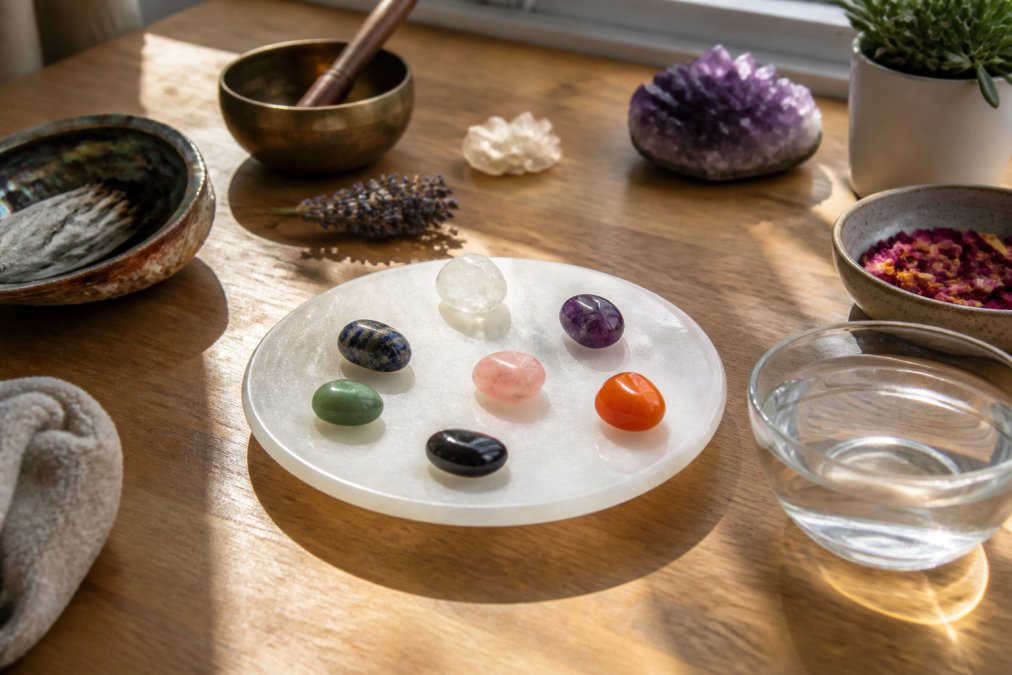
Running Water Cleansing
Running water is one of the simplest cleansing methods. Hold the stone under cool tap water for one to two minutes while visualizing any stagnant energy washing away.
This method only suits hard, non-porous stones. Minerals with a hardness of 5 or below on the Mohs hardness scale can scratch or dissolve. Check the stone's composition before using water, and never use this method on porous stones that can absorb minerals or crack.
Smudging with Sage or Incense
Smudging passes the crystal through cleansing smoke. Light a sage bundle or incense stick and pass the crystal through the smoke several times while setting the intention to release unwanted energy.
For Heaven's Sake carries California white sage bundles that work well for this purpose. The smoke method suits nearly every crystal, making it a versatile option for your collection. It also cleanses the space around you, adding an extra layer of benefit.

Moonlight and Sunlight Charging
Leaving crystals in moonlight, especially during a full moon, is a gentle cleansing and charging method. Overnight exposure works for almost all stones. Place them on a windowsill or outside where they won't be disturbed.
Sunlight also cleanses, but use it sparingly. Prolonged sun exposure fades colored stones like amethyst and rose quartz. A few hours of morning sun works well; full-day exposure risks permanent color loss.
Sound Vibration Cleansing
Sound vibrations break up stagnant energy without touching the stone. Use a singing bowl, tuning fork, or bell, and let the sound wash over your crystals for several minutes.
This method suits every crystal type, including fragile and water-soluble stones. It is also ideal for cleansing multiple pieces at once, since sound carries across a whole collection.
Selenite Plates and Bowls
Selenite is unique among crystals because it never needs cleansing and continuously cleanses anything placed on it. A selenite charging plate or bowl provides a permanent cleansing station for your stones.

Place your new crystals on the plate overnight or for 24 hours. Selenite clears unwanted energy, removes blockages, and recharges the stones simultaneously. This is the lowest-effort method and works for every crystal type, making it ideal for beginners.
| Method | Best For | Time Needed | Works With |
|---|---|---|---|
| Running water | Hard, non-porous stones | 1-2 minutes | Quartz, amethyst, citrine |
| Smudging | Most crystals | 1-2 minutes | Nearly all stones |
| Moonlight | Gentle cleansing and charging | Overnight | Most stones |
| Sunlight | Quick energy boost | 1-3 hours | Light-colored stones only |
| Sound vibration | All crystals, including fragile ones | 3-5 minutes | Every stone type |
| Selenite plate | Low-effort, continuous cleansing | 12-24 hours | Every stone type |
Crystals That Shouldn't Go in Water: Know the Risks
Water damage is the most common mistake in crystal care. The advice to "just rinse it off" fails to account for mineral hardness, porosity, and chemical composition. Using the Mohs hardness scale and known chemical properties, you can predict which stones will survive a rinse and which will dissolve, crack, or rust.
The Mohs Hardness Baseline
A practical rule of thumb: if a mineral is rated 5 or below on the Mohs hardness scale, keep it away from water. These softer stones are porous or slightly water-soluble. Water can seep into microscopic fractures, causing the stone to crack as it dries.
A Practical Safety Table for Water Cleansing
This table gives you a clear, actionable reference for your collection. It is not exhaustive, but it covers the most popular stones in the market.
| Stone | Mohs Hardness | Water Safety | Specific Risk | Safe Alternative |
|---|---|---|---|---|
| Selenite (Satin Spar) | 2 | Never Submerge | Dissolves and becomes chalky; loses its translucency. | Selenite plate (it cleanses others, not itself), sound, smoke. |
| Halite (Rock Salt) | 2 | Never Submerge | Dissolves completely in water. | Dry cloth wipe only. |
| Gypsum (Satin Spar) | 2 | Never Submerge | Dissolves and fractures easily. | Sound, smoke. |
| Malachite | 3.5 - 4 | Never Submerge | Contains toxic copper; water releases it and dulls the polish. | Sound, smoke, dry selenite plate. |
| Azurite | 3.5 - 4 | Never Submerge | Soft and porous; water can cause it to crack or turn to mud. | Sound, smoke. |
| Calcite | 3 | Never Submerge | Dissolves and loses its vibrant color. | Sound, smoke. |
| Fluorite | 4 | Avoid | Water can make it appear cloudy and can cause fracturing along cleavage planes. | Sound, smoke, moonlight. |
| Moonstone | 6 - 6.5 | Avoid | Porous; water can cause it to become brittle and crack. | Sound, smoke, moonlight. |
| Lapis Lazuli | 5 - 5.5 | Avoid | Contains pyrite inclusions that can rust and discolor the stone. | Sound, smoke. |
| Pyrite (Fool's Gold) | 6 - 6.5 | Never Submerge | Contains iron; water causes oxidation and rust, ruining the metallic luster. | Sound, smoke. |
| Hematite | 5.5 - 6.5 | Never Submerge | Water can cause it to rust and turn the water a murky red-brown. | Sound, smoke. |
| Amethyst / Citrine / Quartz | 7 | Safe | Generally safe, but avoid prolonged sun exposure after washing to prevent fading. | Running water, salt (if tumbled), sound. |
| Obsidian | 5 - 5.5 | Safe | Hard enough for water, but be cautious of sharp edges. | Running water, sound. |
The Chemical Reactivity Factor
Hardness isn't the only danger. Some stones contain elements that react negatively with water. The most common culprit is iron. Stones like Pyrite and Hematite are iron-based. When exposed to water, they undergo oxidation, the same process as rusting.
Similarly, Malachite and Azurite are copper carbonates. Water can cause them to leach copper, which is toxic. This is a safety hazard for you and a death sentence for the stone's finish.
The 'When in Doubt' Protocol
If you are unsure of a stone's identity or composition, do not test it with water. The cost of a mistake is permanent damage. Instead, default to a dry cleansing method. Sound vibration, smudging with smoke, or placing the stone on a selenite plate are universally safe for every crystal type. These methods are the only truly risk-free options for an unknown stone.
How Long to Cleanse Crystals for Best Results
Cleansing time varies by method and the stone's condition. A quick energetic reset takes as little as one minute with smoke or running water. A deeper cleanse benefits from overnight exposure.
For new crystals that have traveled long distances, err on the longer side. Leave them on a selenite plate for 24 hours or through a full moon cycle. There is no harm in extending the cleanse.
A general schedule keeps your collection maintained. Cleanse new stones before first use, then refresh them monthly or whenever they feel heavy.
How to Charge Crystals After Cleansing
Cleansing removes old energy, but charging fills the stone with fresh, positive energy. The two steps work together: cleanse first, then charge.
Moonlight charging is the most popular method. Place your cleansed crystals outside or on a windowsill during a full moon and leave them overnight. The moon's energy is gentle and suits all stones. Sunlight charging works faster but risks fading colored stones, so limit exposure to a few morning hours.
Selenite also charges while it cleanses. Leaving a stone on a selenite plate or bowl for 12 to 24 hours both clears and energizes it. This dual action makes selenite a practical addition to any crystal practice, and For Heaven's Sake offers several selenite options sized for different collections.

How to Program Crystals with Your Intentions
Programming sets the crystal's purpose after cleansing and charging. Hold the stone in your dominant hand and focus on your intention, whether that is calm, focus, protection, or healing. State your intention clearly and visualize the crystal absorbing it.
Keep the statement simple and positive. Instead of "I don't want to feel anxious," try "I carry calm and clarity." The crystal responds to the energy of your words, so phrasing matters.
Breathwork enhances programming. Take a few slow breaths while holding the stone, then exhale your intention into it. Re-program whenever your goals shift, since the stone will hold the most recent intention you set.
Common Cleansing Mistakes to Avoid
Even experienced practitioners slip up. While water and sun damage are the most frequent physical errors, the most significant mistakes often involve a lack of awareness. Here are the critical pitfalls to avoid.
The Physical Mistakes: Water and Sun
1. The 'One-Size-Fits-All' Water Rinse
This is the most damaging error. Assuming all crystals are safe to hold under a tap ignores the Mohs hardness scale and chemical composition. Stones like Selenite, Malachite, and Calcite can be permanently ruined by a single rinse.
2. The Sunlight Fade
Sunlight is a powerful cleanser, but it is also a relentless bleacher. The mistake is leaving colored stones in direct sun for extended periods. Amethyst, Rose Quartz, Citrine, and Fluorite are particularly vulnerable. The vibrant hues will fade to pale, washed-out shades, and this color loss is irreversible. Limit sun exposure to the early morning hours for a maximum of 30-60 minutes.
The Awareness Mistakes: Energy and Intention
3. Cleansing Without an Intention
Running water over a stone or passing it through smoke is a mechanical act. The true power of cleansing lies in the intention behind it. The mistake is doing it mindlessly. Focus on the act, visualize the stagnant energy releasing, and state your intention to reset the stone.
4. Ignoring the 'Placebo' Effect
It is a mistake to dismiss the psychological dimension of crystal work. Whether or not you believe crystals hold metaphysical energy, the ritual of cleansing has a measurable impact on the user. It creates a moment of calm, focus, and intentionality. The cleansing ritual works on two levels: the energetic and the psychological, and both are valid.
The Eco-Conscious Mistakes: Sustainability
5. Unsustainable Smudging
The most common mistake in modern crystal care is the over-reliance on white sage. Due to its popularity, white sage has been over-harvested, threatening its wild populations. The mistake is not cleansing with smoke, but doing so without considering the source.
Eco-Friendly Alternatives:
- Use Other Herbs: Palo Santo (from sustainably fallen wood), cedar, sweetgrass, or even common culinary herbs like rosemary and lavender are excellent alternatives. They produce cleansing smoke without the same conservation concerns.
- Sound is Zero-Waste: A singing bowl or tuning fork requires no resources and produces no waste. It is the most eco-friendly method available.
- Visualization and Breathwork: This is a powerful, completely sustainable method. Hold the crystal and visualize a bright white light surrounding it, washing away all stagnant energy. Pair this with deep, intentional breaths. This method is free, requires no materials, and can be done anywhere. It is a modern, sustainable answer to a traditional practice.
Avoiding these mistakes will ensure your cleansing practice is effective, safe for your stones, and respectful of the world around you.
Building a Cleansing Ritual That Works for You
Consistency matters more than complexity. A simple ritual you repeat beats an elaborate one you skip. Start with one method you enjoy.
Pair your cleansing with a regular practice. Many people cleanse their collection on the same day each month or align it with the lunar cycle.
As your collection grows, a selenite plate becomes a practical investment. It cleanses and charges continuously with zero effort, which suits anyone with a busy schedule. For Heaven's Sake carries selenite charging plates and bowls that keep your stones ready whenever you need them.
Cleansing new crystals is a simple practice with meaningful results, but it requires knowing which method suits each stone. Start with the dry methods, smudging or sound vibration, until you understand your crystal's hardness and composition. For Heaven's Sake has served the Denver community since 2000. Visit our Lakewood location at 2680 Youngfield Street to explore our collection of ethically sourced stones and ceremonial supplies.
Frequently Asked Questions
What should you do with new crystals when you first get them?
Cleanse them before your first use. New crystals may have absorbed energy from mining, shipping, and handling by others. Start with a gentle method like smudging or placing them on a selenite plate overnight. Avoid water for stones like selenite or malachite. After cleansing, hold the crystal and set your intention for how you want to use it.
How long to cleanse crystals with moonlight?
A full moon overnight is the standard recommendation, roughly 8 to 12 hours. Set your crystals on a windowsill or outside where moonlight reaches them directly. During a new moon, you can leave them for two consecutive nights. Cloudy skies still work, though clear nights offer stronger exposure.
Do all crystals need to be cleansed?
Most crystals benefit from cleansing, especially new ones or after heavy use. A few exceptions exist. Selenite and clear quartz are self-cleansing and can clear other stones. If you use your crystals for meditation or energy work, cleanse them after each session. Decorative stones that you do not work with energetically need less frequent cleansing.
How do you activate crystals for the first time?
After cleansing, hold the crystal in your dominant hand or place it over your heart. Take three deep breaths and state your intention clearly, such as 'I intend this amethyst to support calm sleep.' Speak it aloud or silently. Some people visualize white light entering the stone. Your crystal is now programmed and ready for use.