

Table of Contents
- Understanding Your Intuition vs. Setting an Intention
- Best Crystals for Beginners
- How to Tell If a Crystal Is Real
- Choosing Raw vs. Polished Crystals
- How to Cleanse Crystals When You Bring Them Home
- Common Beginner Mistakes to Avoid
- Ethical Sourcing and Sustainable Crystal Practices
- Frequently Asked Questions
Last Updated: October 2, 2026
Understanding Your Intuition vs. Setting an Intention
When you choose your first crystal, know that it's deeply personal. The process splits into two paths: trusting what draws you visually, or picking a stone for a specific purpose. Both approaches work. The key is understanding which one fits your style.
Trusting Your Visual Attraction
Your eyes know something your mind hasn't caught up to yet. When you walk into a crystal shop, certain stones call to you. That pull is real, and it matters.
Intuitive selection means you pick based on what feels right in the moment. You see a stone and know immediately it belongs with you.
Many beginners worry they're doing it wrong by choosing based on looks alone. They're not. Visual attraction is valid.
Choosing with a Specific Purpose in Mind
The other path is intentional. You identify what you're seeking, grounding, compassion, clarity, and then find the stone that matches that need.
This requires knowing what each crystal offers. You research, you ask questions, you narrow down options based on what you're working toward.
Both methods create a real connection. Intuitive buyers often discover their stone had exactly the properties they needed. Intentional buyers frequently find their chosen crystal becomes visually meaningful to them over time.
Best Crystals for Beginners
Starting with the right stone makes everything easier. These three crystals suit newcomers because they're durable, widely available, and their properties are straightforward to work with.
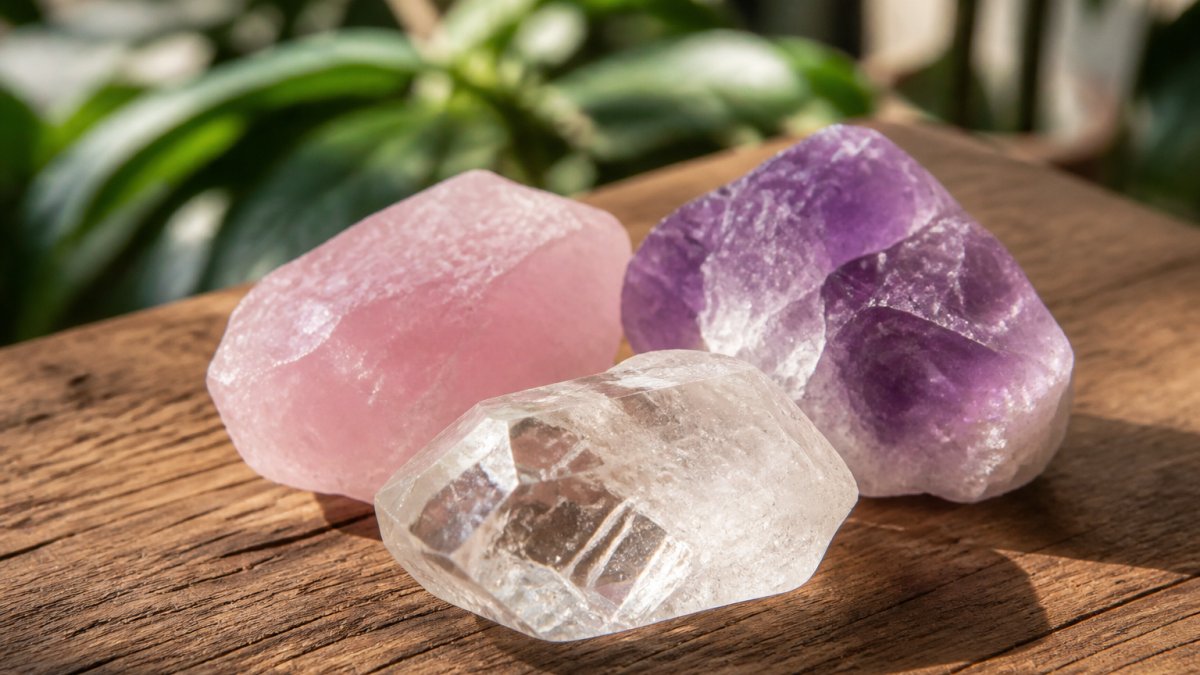
Clear Quartz: The Master Healer
Clear quartz is the foundation stone for anyone beginning their crystal practice. It's versatile, forgiving, and powerful without being overwhelming.
This stone amplifies intention. Whatever you're working toward, healing, clarity, focus, clear quartz strengthens that effort. It's called the master healer because it adapts to what you need.
Clear quartz is also extremely durable. You can carry it, sleep with it, cleanse it repeatedly without worry.
You'll find clear quartz everywhere. Every crystal shop stocks it. Every price point carries it.
Rose Quartz: The Stone of Compassion
Rose quartz teaches gentleness. It softens harsh inner voices and opens you to self-love and compassion for others.
This stone works slowly. You won't feel a dramatic shift overnight. Instead, over weeks and months, you notice you're kinder to yourself.
Beginners love rose quartz because the energy feels safe. It doesn't demand anything from you. It simply reminds you that you deserve compassion, starting with your own.
Like clear quartz, rose quartz is affordable and easy to find. It's also gentle enough that you can't overdo it.
Amethyst: The Grounding Stone
Amethyst calms your nervous system and grounds scattered energy. If your mind races or you feel anxious, this stone helps settle you.
The purple color alone seems to slow your breathing. Amethyst carries a naturally calming vibration that many beginners notice immediately. You don't need months of practice to feel its effect.
Amethyst also supports intuition and spiritual connection. As you deepen your practice, this stone grows with you. It's beginner-friendly but never outgrows your needs.
How to Tell If a Crystal Is Real
Authenticity matters. Fake stones won't harm you, but they won't work the way real crystals do. Learning to spot the difference protects your investment and your practice.
Real crystals show natural variation. They have inclusions, color shifts, and minor imperfections. These aren't flaws, they're proof the stone formed naturally over millions of years.
Fake crystals look too perfect. The color is uniform. The shape is identical to ten others on the shelf. The surface is flawless. That uniformity signals synthetic production or heavy treatment.
Identifying Synthetic Stones and Dyed Minerals
Synthetic crystals are lab-created. They have the same chemical structure as real stones but lack the earth's energy signature.
Dyed minerals are real stones treated with artificial color. Rose quartz is sometimes dyed to look more vibrant. Amethyst gets darkened artificially.
Check the price. If a stone costs far less than comparable pieces, it's likely synthetic or heavily treated. Real crystals carry real costs.
Ask the seller directly. A reputable shop will tell you if a stone is treated or synthetic.
Natural Inclusions and Authentic Crystal Features
Real crystals contain natural inclusions. You might see tiny lines, color variations, or cloudy patches inside. These aren't impurities, they're proof of authenticity.
Look for striations, which are fine lines running through the stone. These form as the crystal grew. Synthetic stones rarely have natural striations.
Weight matters too. Real crystals feel solid and substantial. Synthetic stones often feel lighter than expected for their size.
The surface texture tells a story. Natural crystals show wear patterns. Polished stones have smooth surfaces with occasional natural marks.
Choosing Raw vs. Polished Crystals
Raw and polished crystals both work.
Raw crystals show their natural formation. Rough edges, visible inclusions, and uneven surfaces remind you these are earth-born objects.
Raw crystals are also more fragile. Those rough edges can chip. The surfaces collect dust.
The Crystal Bible: A Deinitive Guide to Crystals (Quality Paperback) →
Polished crystals are refined and beautiful. Smooth surfaces feel good in your hand.
The trade-off is that polishing removes some of the stone's natural character.
Start with whichever appeals to you visually. Your connection to the stone matters more than its form.
How to Cleanse Crystals When You Bring Them Home
New crystals carry the energy of everyone who handled them before you. Cleansing clears that accumulated energy and prepares the stone for your work.
Cleansing isn't complicated. You don't need special tools or rituals. Simple methods work just as well as elaborate ones.
Simple Cleansing Methods for Beginners
Running water is the easiest approach. Hold your crystal under cool running water for 30 seconds to one minute.
Moonlight works beautifully too. Place your crystal on a windowsill overnight during a full moon. The moon's light naturally purifies the stone.
Smoke cleansing uses intention and breath. Light a stick of sage or incense. Pass your crystal through the smoke several times.
Some people use sound. Ring a bell or play a singing bowl near your crystal. The vibration clears stagnant energy.
Setting Intentions After Cleansing
After cleansing, your crystal is ready to work with your energy. This is when you set your intention.
Hold the stone in your hand. Close your eyes. Think clearly about what you want this crystal to support in your life. Be specific.
Speak your intention aloud or silently. Either way works. What matters is clarity and conviction. Your crystal now understands its purpose.
Some people sleep with their newly programmed crystal. Others carry it. Some place it on an altar or shelf. The method doesn't matter.
Common Beginner Mistakes to Avoid
Learning what not to do saves you time and frustration.
Many beginners buy too many crystals at once.
Another common mistake is expecting instant results. Crystals work subtly. You might not feel anything for weeks.
Some beginners neglect their stones.
Comparing your experience to others creates unnecessary doubt. Your relationship with your crystals is unique.
Overcomplicating the process is another trap. You don't need expensive cleansing kits, special altars, or complex rituals.
Finally, avoid treating crystals as a substitute for professional help.
Ethical Sourcing and Sustainable Crystal Practices
Where your crystals come from matters.
Ethical sourcing means crystals were extracted without harming workers or destroying ecosystems.
Ask your crystal seller about sourcing. Where do their stones come from?
Support small, independent businesses when you can.
Sustainable practices also mean respecting the stones you already own.
Avoid buying rare or endangered crystal varieties.
Choosing your first crystal is an act of self-care.
The right stone finds you when you're ready. Trust that process.
Visit For Heaven's Sake in Lakewood to explore our collection in person.
Frequently Asked Questions
What should my first crystal be?
Clear quartz, rose quartz, or amethyst are ideal starting points for beginners. Clear quartz works as a versatile all-purpose stone, rose quartz supports emotional healing and self-compassion, and amethyst offers grounding energy. Choose based on what draws you visually or what intention resonates with your current needs. Let your intuition guide you, if you feel naturally attracted to a stone, that's often the right choice for where you are in your spiritual journey.
How can I tell if a crystal is authentic?
Authentic crystals typically show natural inclusions, slight color variations, and minor imperfections rather than perfect uniformity. Synthetic stones and dyed minerals often appear too uniform or have unnaturally bright colors. Real crystals feel weighty and have visible natural formations. Check the source of your purchase, reputable metaphysical retailers provide transparent information about crystal origins. If buying online, request detailed photos showing the stone from multiple angles to verify authenticity before purchase.
Do I need to cleanse my first crystal after buying it?
Yes, cleansing your crystal when you first bring it home removes any energy it may have absorbed during handling and transit. Simple methods include holding it under running water, placing it in moonlight overnight, or using smoke from sage or palo santo. After cleansing, set an intention by holding the crystal and focusing on what you want it to support in your life. This establishes a personal connection between you and your stone and prepares it for your spiritual practice.
Does the shape of the crystal matter for beginners?
Crystal shape can influence how you interact with your stone, but it doesn't determine its effectiveness. Tumbled stones are smooth and portable, making them ideal for carrying with you. Raw or pointed formations may feel more energetically powerful to some practitioners. Crystal clusters work well for home altars or meditation spaces. Choose a shape that appeals to you and fits your intended use, whether you want something to hold during meditation, display on a shelf, or carry in your pocket.