

Table of Contents
- Quick Comparison: Top Tarot Decks for Beginners
- Why the Rider-Waite-Smith Is the Gold Standard
- How to Choose Your First Tarot Deck
- How to Read Tarot Cards for Beginners
- Beginner Tarot Spreads to Get Started
- How to Cleanse Your First Tarot Deck
- Budget-Friendly vs. Premium Decks: Finding Your Fit
- Accessibility and Intuitive Learning Styles
- Frequently Asked Questions
Last Updated: September 20, 2026
Choosing your first tarot deck is exciting but can feel overwhelming. The good news: the 7 best tarot decks for beginners share common qualities that make learning intuitive and rewarding.

The right deck depends on your learning style, budget, and aesthetic preferences. Let's explore how to choose wisely and discover the 7 best tarot decks for beginners.
Quick Comparison: Top Tarot Decks for Beginners
| Deck | Price | Best For | Key Feature |
|---|---|---|---|
| Your First Tarot | $22.95 | Absolute beginners | Keywords on each card for easy reference |
| Radiant Rider-Waite | $21.95 | Traditional learners | Clear Rider-Waite-Smith symbolism with vibrant colors |
| Universal Waite (Standard) | $21.95 | Portable use | Standard size with excellent card stock |
| Universal Waite (Tin) | $19.95 | Travel & gifting | Compact size in protective tin |
| Hanson-Roberts | $21.95 | Visual learners | Fairy tale imagery with multilingual card titles |
| Morgan-Greer | $21.95 | Modern aesthetic | Borderless cards with bold, contemporary art |
| Complete Tarot Kit | $59.95 | Comprehensive learning | Two decks plus 246-page guidebook and reference tools |
Why the Rider-Waite-Smith Is the Gold Standard
The Rider-Waite-Smith deck, created in 1909, remains the most widely recognized tarot system. Its clear symbolism and accessible imagery form the foundation most tarot teachers use when training beginners.

The Major Arcana cards tell a narrative journey from the Fool to the World, while the Minor Arcana (Cups, Wands, Swords, and Pentacles) use consistent visual language that becomes intuitive with practice. Every card includes detailed imagery that supports interpretation.
How to Choose Your First Tarot Deck
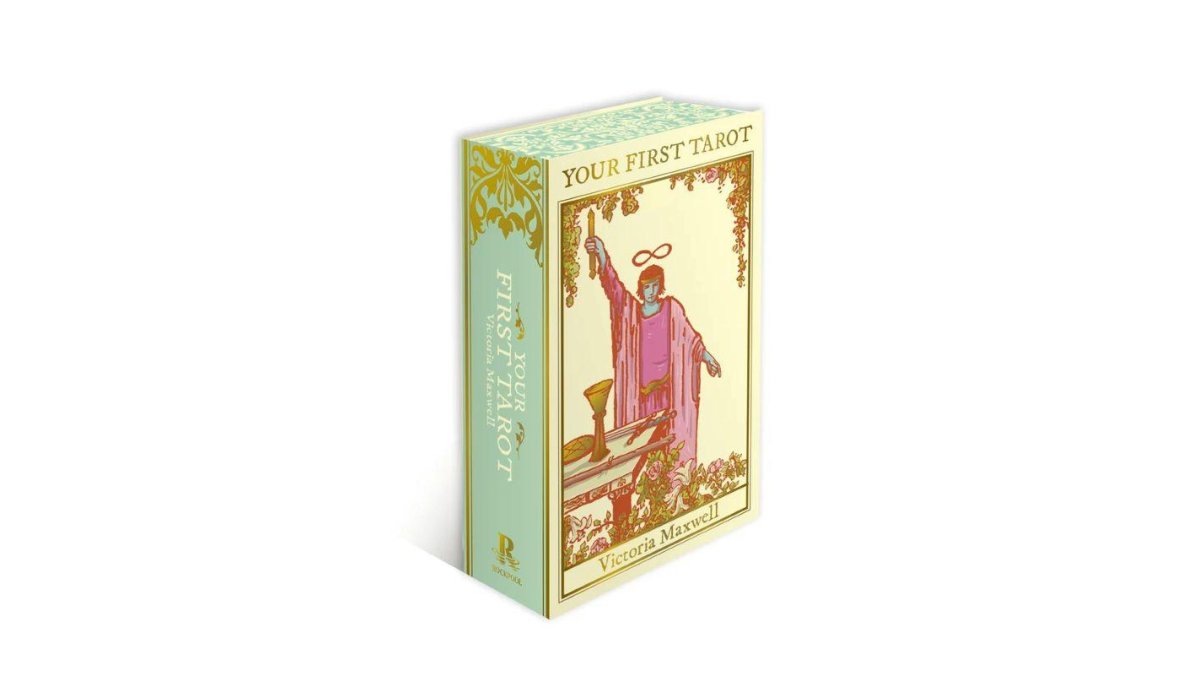
Selecting your first deck involves three practical decisions: artwork style, physical handling, and learning support.
Beginner-Friendly Artwork and Symbolism
Does the artwork speak to you? If a deck's imagery feels cold or confusing, you'll dread shuffling it.
Decks close to the Rider-Waite-Smith tradition offer the safest entry point.
Card Stock Quality and Shuffleability
Physical feel affects your relationship with the deck. Cards that are too thin feel flimsy; too-thick cards become difficult to shuffle.
Guidebook Quality and Learning Support
Your first guidebook shapes how you interpret cards. A strong one accelerates your learning significantly.
How to Read Tarot Cards for Beginners
Reading tarot is a skill that improves with practice. Understanding the actual mechanics accelerates your learning significantly.
Setting Intention Before You Shuffle
Before touching your deck, clarify what you're asking. A simple mental statement works: "What do I need to know about this situation?"
The Shuffle: Mechanics and Myths
There is no "correct" shuffle. Overhand, riffle, pile, or table shuffles all work equally well.
Drawing and Laying Out Cards
After shuffling, cut the deck or draw directly. No single method is "correct."
Reading Multiple Cards in Sequence
Lay out all cards before flipping any face-up. This prevents anchoring to the first card.
Common Beginner Reading Mistakes to Avoid
Mistake 1: Forcing meanings to match your hopes. The cards show what's true, not what you want to hear.
Building a Reading Practice
A five-minute daily draw teaches you more than a 90-minute reading once a month. Keep a tarot journal. After each reading, write down the cards, your interpretation, and what happened. Review entries monthly to see patterns.
Beginner Tarot Spreads to Get Started
A spread is a pattern for laying out cards to answer a specific question or explore a situation from multiple angles. Master simple spreads deeply before attempting complex ones.
Daily Draw (1 Card)
Each morning, draw one card. Ask: "How does this energy show up in my day?" The daily draw builds familiarity fastest. By month's end, you'll have encountered most of the 78 cards multiple times.
Three-Card Spread (3 Cards)
Draw three cards and lay them in a row. Choose one framework:
- Past-Present-Future: Card 1 shows the situation's origin. Card 2 shows where you are now. Card 3 shows the likely outcome.
- Situation-Action-Outcome: Card 1 describes the challenge. Card 2 suggests what action or perspective will help. Card 3 shows the result.
- Mind-Heart-Intuition: Card 1 represents what your logical mind thinks. Card 2 represents what your heart feels. Card 3 represents what your intuition knows.
- What I See-What I Don't See-What Supports Me: Card 1 is the obvious aspect. Card 2 is the hidden element. Card 3 is the resource you can draw on.
Five-Card Spread (5 Cards)
Draw five cards and lay them in a row or plus-sign pattern.
Row layout positions:
- Card 1: What you see or understand about the situation
- Card 2: What you don't see or are overlooking
- Card 3: What supports you or works in your favor
- Card 4: What challenges you or works against you
- Card 5: The likely outcome or what the situation is moving toward
Plus-sign layout positions:
- Center card: The core of the situation or the person asking the question
- Top card: What's above or beyond the situation (higher perspective, spiritual lesson)
- Bottom card: What's below or underlying the situation (hidden factors, root causes)
- Left card: What's moving away or ending
- Right card: What's approaching or beginning
Celtic Cross (10 Cards)
This is the most famous tarot spread. Draw ten cards and lay them in a specific pattern.
Position meanings:
- The situation or person asking the question
- What crosses or challenges the situation
- What's conscious or known
- What's unconscious or hidden
- What's behind or in the past
- What's ahead or in the future
- How you see the situation
- How others see the situation
- Your hopes or fears
- The outcome
How to Cleanse Your First Tarot Deck
Cleansing prepares your deck energetically. There's no single "correct" method.
Budget-Friendly vs. Premium Decks: Finding Your Fit
The most expensive deck isn't necessarily the best teacher.
For under $25, you get excellent options. Your First Tarot, Radiant Rider-Waite, Universal Waite, Hanson-Roberts, and Morgan-Greer all teach the Rider-Waite-Smith system effectively. The differences are aesthetic and physical, card size, artwork style, and guidebook quality, not fundamental learning value.
Accessibility and Intuitive Learning Styles
Tarot works differently for different minds. Some people are visual learners who connect deeply with artwork. Others are linguistic learners who need clear written guidance. Still others are kinesthetic learners who need to feel the cards in their hands.
Frequently Asked Questions
What is the best tarot deck for a complete beginner?
The Rider-Waite-Smith system is the industry standard for beginners because its symbolism is consistent across decks and widely documented. Your First Tarot ($22.95) is specifically designed for newcomers, featuring keywords on each card to guide interpretation. If you want a comprehensive start, The Complete Tarot Kit ($59.95) includes two decks, a 246-page guidebook, spreads, and a reference chart, everything you need to build confidence with tarot reading for beginners.
Do I need to buy my own tarot deck, or can I borrow one?
You can start with a borrowed deck, but owning your own has real benefits. A personal deck becomes attuned to your energy through regular handling and shuffling. This deepens your intuitive connection over time. Starting with an affordable option like the Universal Waite Tarot Deck Tin ($19.95) lets you explore without major investment, then upgrade later if you want a larger deck or different artistic style.
What should I look for in beginner-friendly artwork?
Look for clear, detailed imagery that shows the card's meaning visually. Avoid decks with abstract or heavily stylized art if you're new to tarot. The Rider-Waite-Smith tradition uses archetypal symbolism that's easy to interpret, figures, objects, and colors all carry meaning. Decks like Hanson-Roberts reinterpret this with fairy tale imagery, making symbolism intuitive. Start with decks that show complete scenes rather than minimal symbols; this visual clarity speeds up your learning with beginner tarot spreads.
How do I know if a deck's guidebook will actually help me learn?
Check whether the guidebook includes card meanings for both upright and reversed positions, explains the Major and Minor Arcana structure, and provides sample spreads. The Complete Tarot Kit's 246-page full-color book covers all this plus interpretation techniques and symbolism history. If you're buying a standalone deck, read reviews about the included booklet. A weak guidebook means you'll struggle to understand card meanings, invest in a kit or pair your deck with a separate learning resource.
Should I get a full-size deck or a portable tin version?
Full-size decks (like Radiant Rider-Waite at 4.75 x 2.75 inches) are easier to shuffle and read because cards are larger and easier to handle. Portable tins (3.5 x 2 inches) are perfect if you travel frequently or want a gift-ready option. Both contain the same 78 cards and symbolism. Start with full-size if this is your first deck, better shuffleability and card visibility improve your learning experience. Upgrade to a tin version later if portability becomes important for your spiritual practice.
Finding your first tarot deck is an exciting beginning. Whether you choose a classic Rider-Waite variant, a visually distinctive deck, or a comprehensive learning kit, what matters most is that you choose something you'll actually use. The best deck is the one in your hands daily, building your intuitive connection card by card. Visit For Heaven's Sake in Lakewood to hold decks in person, ask questions, and find the one that calls to you. Our team is here to support your spiritual journey.